
Let's start with what he's actually afraid of
Your partner doesn't resist a vibrator because it's weird. He resists it because he's heard a story in his head. That story usually goes like this. If you need a toy, he's not enough. If you want extra sensation, he's failing. If pleasure comes from somewhere outside the relationship, the relationship is broken.
None of that is true. But the story is so common and so deeply embedded in how men are raised that it doesn't need to make sense for him to believe it.
Here's the thing that changes the whole conversation. A Lem vibrator works differently than a traditional vibrator. It uses air suction instead of buzzing. That design shift matters because it reframes the toy from "a replacement" to "a tool you use together."
Why the conversation fails (and how to restart it)
Most people bring up sex toys at the wrong moment. You mention it during sex, when he's already vulnerable. Or you ask permission, which puts him on the defensive before the conversation even starts. Or you say something logical like "It would feel amazing" without addressing the real issue, which is his fear.
Here's what works instead. Bring it up outside the bedroom. Use these exact words: "I want more sensation in my body when we're together. I've been thinking about trying something, and I'd like your input."
That phrasing does three things at once. It centers your pleasure, not a replacement for him. It positions him as a partner in the decision, not an obstacle. And it makes the conversation collaborative instead of confrontational.
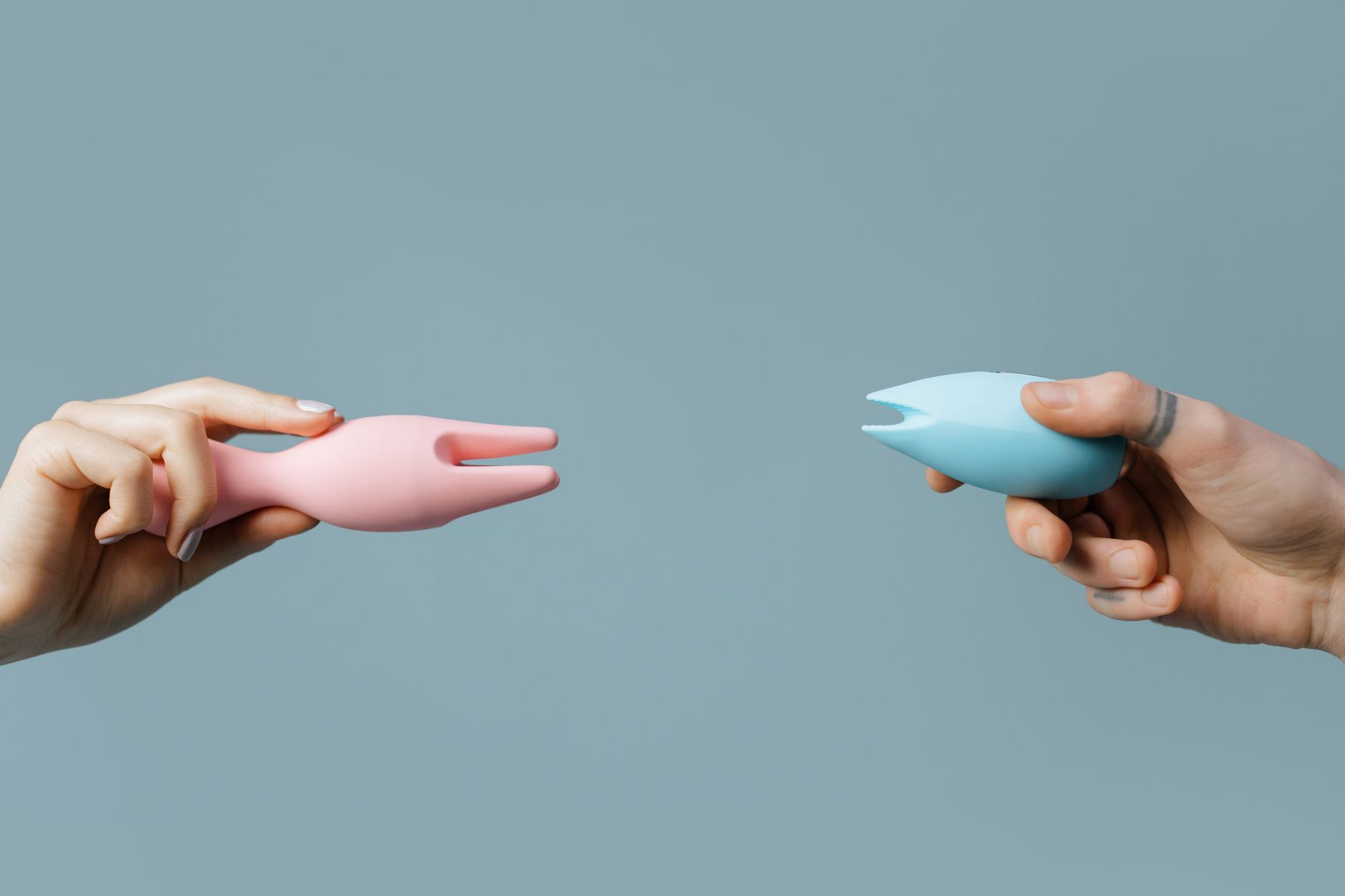
Photo by cottonbro studio on Pexels
He'll probably say something like "I thought I was enough" or "Why do you need that?" This is the moment where most people get defensive back. Don't. Instead, lean in. Say: "You are enough. This isn't about replacing what we have. This is about me knowing my own body better and enjoying what we already do even more."
That is factually true. Vibrators don't replace partners. They amplify what's already there. The sensation is different, not better. It's additive, not subtractive.
Why clitoral vibrators actually help couples
Here's the research part. About 75 percent of people with vulvas need clitoral stimulation to orgasm. Of those, most need consistent, direct stimulation. That's not a flaw. That's anatomy.
What this means in practice. Many couples end up having penetrative sex that feels good for one person and neutral for the other. That's not a failure of attraction or technique. That's just how bodies work. A clitoral vibrator shifts that dynamic instantly. It makes the sex better for both of you because you're actually experiencing pleasure at the same time.
Your partner might not realize this when he's resisting. He might think a vibrator is for solo use or for replacing him. So spell it out. Tell him exactly what you want to do. "I want you inside me, and I want to use the vibrator on my clitoris at the same time. So we both feel amazing together."
That's not a separate activity. That's just better sex.
The design that changes his mind
Some partners warm up to the idea of a vibrator once they understand the logistics. Others need to see it. The Lem vibrator is worth showing him because it doesn't look threatening. It's small, it's not aggressively anatomical, and it doesn't require a ton of explanation.
More importantly, the suction design makes sense to people who've never used a vibrator before. You can show him how it works on his wrist or his arm. The sensation is completely different from a traditional buzzer. It's gentler, more localized, and it honestly feels closer to manual stimulation than vibration does.
Let him experience it firsthand. Not sexually. Just let him feel what it does. That usually dissolves the weirdness factor fast.
When you use it together for the first time
Don't make it a big production. Don't announce that tonight is "vibrator night." Just have it there. When you're intimate, when you're already turned on, say something simple: "I want to try this. Is that okay?"
Start slow. Low intensity. Let him watch. Let him see how you respond. That's often the moment where the resistance evaporates. When he sees you experiencing real pleasure, the fear that the toy is about him disappears. It becomes about you. And most partners actually like being part of that.
If he wants to hold it, let him. If he wants to use it on you, even better. That turns it from something you're using on yourself into something you're doing together. The entire framing shifts.
What to do if he's still resistant
Sometimes the answer isn't "just show him how it works." Sometimes the resistance is deeper. It's connected to his own insecurity, or his beliefs about sex, or his need to be the sole source of your pleasure. That's a relationship conversation, not a vibrator conversation.
If after a few honest talks he still won't budge, you have a choice. You can accept that this is a boundary he has, or you can recognize that this is a sign of a bigger intimacy problem. How to Rebuild Desire When It Fades After Long-Term Relationship Changes digs deeper into what resistance like this often signals.
But in most cases, resistance isn't a hard no. It's a fear with a story attached. Once you separate the fear from the story, and show him that the toy is about the two of you having better sex together, the resistance tends to soften pretty fast.
The conversation after the resistance breaks
Once he's on board, the dynamic often shifts in unexpected ways. Some partners become enthusiastic about toys. Some stay neutral. Most just become glad that you're enjoying yourself more. The best outcome is when he sees that you're happier and more satisfied with sex, and that happiness flows back into the relationship.
If that happens, you might explore toys together as a couple experience. That's a different conversation entirely.
For now, remember this. His resistance isn't about the vibrator. It's about a story he's been told about what sex is supposed to mean. Once you reframe it as something that makes your sex life better for both of you, the story changes. And usually, he changes with it.
People also ask
Will using a sex toy make my partner feel inadequate?
Not if you're clear about what the toy does. It doesn't replace him. It works with him. The easiest way to reassure a resistant partner is to explain that you want to use it during sex, not instead of sex. A lemon clitoral vibrator is designed to enhance what you're already doing together, not to substitute for penetration or intimacy. Once he understands that, the fear usually dissolves.
How do I bring up sex toys without making it seem like I'm criticizing his technique?
Timing and framing matter enormously. Don't bring it up during sex or right after, when he's vulnerable. Choose a calm moment outside the bedroom and frame it around your pleasure, not his performance. Say something like "I've been curious about exploring more sensation," not "I need something to actually enjoy sex." The difference is subtle but powerful.
What if my partner thinks vibrators are emasculating?
That belief is pretty common, especially for men who grew up in environments where sex was tied to masculine performance. The best counter is to let him experience the vibrator himself, usually on his wrist or arm. Once he feels how different and gentle it is, and once he sees you enjoying it, the emasculation fear usually vanishes. You can also frame it explicitly: "This makes me feel closer to you, not further away."
Should I buy the vibrator before asking, or ask first?
Ask first. If you buy it without checking in, his resistance will be stronger because he'll feel like the decision was made without him. Asking first also means you can involve him in choosing, which makes it feel collaborative. The Lem vibrator is easy to introduce in a conversation because it's visually non-threatening and the technology is straightforward.
How do I use a lemon vibrator if my partner is still uncomfortable?
If he's still uncomfortable after an honest conversation, you have the right to use it solo. Your pleasure is valid with or without his comfort. That said, if the discomfort persists, it might point to a deeper relationship issue worth exploring with a couples therapist. Sometimes resistance to toys signals resistance to your pleasure more broadly, and that's worth addressing.
What if we try it and he hates it?
One bad experience doesn't mean he'll always hate it. Give it time. Sometimes people need a few tries to get comfortable with something new. If he's open to it after a few attempts, great. If he's genuinely not interested, that's also okay. The goal isn't to convince him to love toys. It's to create enough space for your pleasure in the relationship.
The bigger picture
Resistance to sex toys often isn't really about the toy. It's about what sex means in the relationship, what pleasure means, and whether both partners feel safe exploring together. Once you start that conversation honestly, the vibrator becomes almost secondary. The real shift happens when he understands that your pleasure enhances the relationship instead of threatening it.
If you're finding that resistance runs deep, or that conversations about pleasure keep hitting walls, that's worth addressing with a professional. A couples counselor trained in intimacy can help you both move past the fear and into a partnership where your pleasure is celebrated instead of resisted.