
Let's talk about the elephant in the bedroom
Introducing a vibrator into your partnership feels like it should be simple. It's not, and pretending it is wastes a lot of couples' time and energy. Toys feel loaded with meaning—sometimes they shouldn't, but they do. One partner might worry it means they're not enough. The other might feel exposed. Both of you might be picturing something that looks nothing like what actually happens.
Here's the thing: using a clitoral vibrator together, whether it's a Lem or any lemon sexual toy, is just another tool for feeling good. The conversation around it, though? That's where the real connection lives.
The conversation needs to happen before clothes come off
This is non-negotiable. Bringing a toy into the bedroom mid-flow, without warning, kills the mood for most people. Instead, pick a moment when you're both clothed, fed, and not exhausted. This could be over coffee, on a walk, or just sitting on the sofa.
Start here: "I've been thinking about exploring something new together, and I want to talk about it first." That sentence does the heavy lifting. It signals respect, curiosity, and partnership.
Then say what you actually mean. "I'd like to try using a vibrator sometimes when we're together" is clear. It's specific without being prescriptive. You're not saying "I need this" or "You're not doing enough." You're saying "I want us to explore this."
Listen for what's underneath the yes or no
If your partner says yes immediately, great. But also ask: "What are you thinking? Any concerns?" Sometimes people say yes to keep the peace, then feel resentful later. You want the real answer.
If your partner hesitates or says no, don't defend. Just listen. Common worries: "Does this mean I'm not satisfying you?" or "Will you prefer it to me?" These aren't logical objections. They're attachment fears, and they deserve respect, not logic.
Your job is to name what you hear: "I'm sensing this feels a bit threatening. That makes sense. Let me be clear: this is about us exploring more ways to feel good together, not about anything lacking between us."
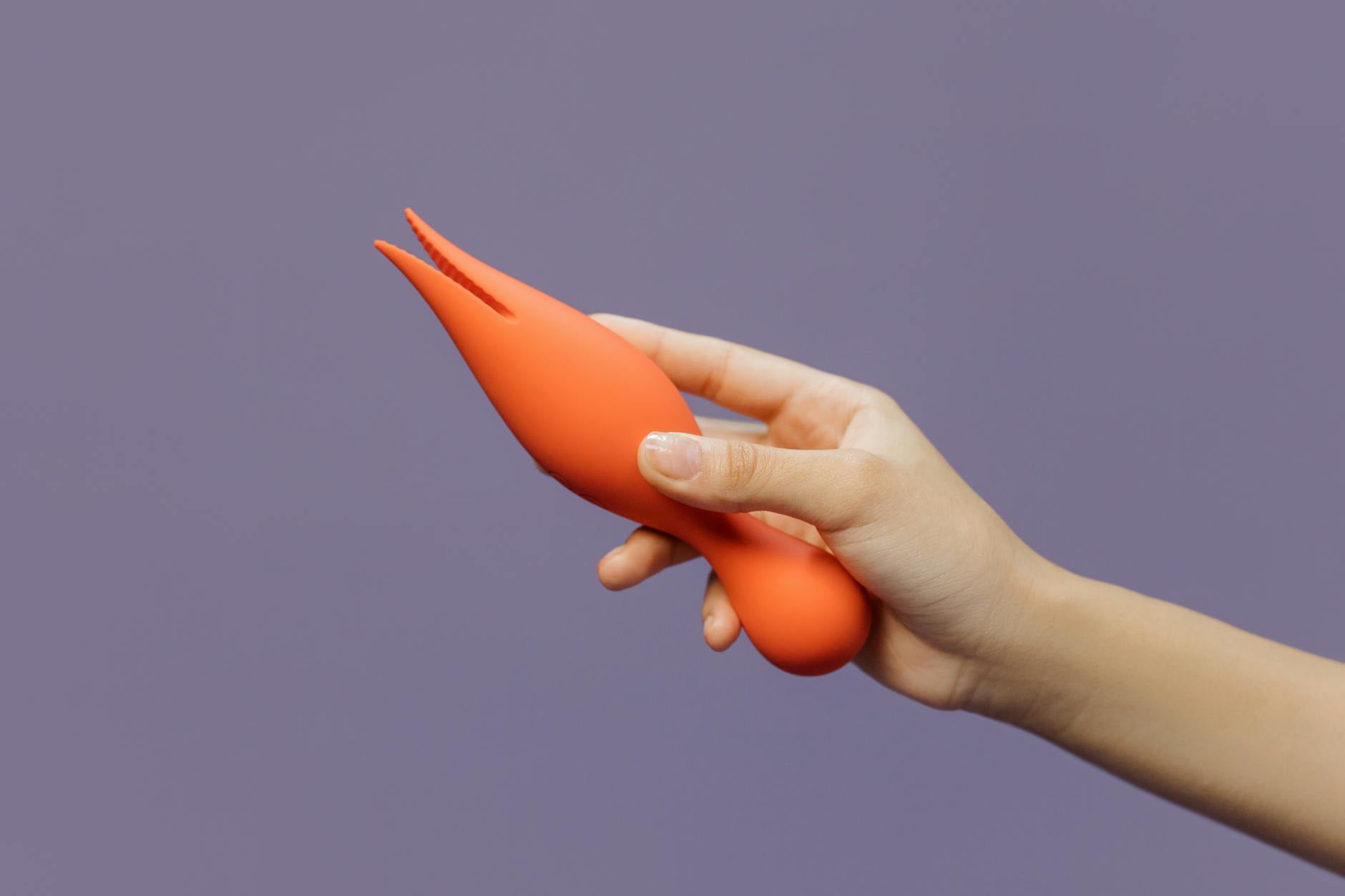
Photo by cottonbro studio on Pexels
Why the Lem specifically works for couples
Lemon vibrators, particularly clitoral suckers like the Lem, feel less intimidating for partnered exploration than traditional vibrators. Here's why:
They're smaller and quieter, so nothing feels clinical or overwhelming. The suction sensation is genuinely different from fingers or penetration, so it introduces novelty without feeling like you're replacing anything. You can hold it yourself, which keeps you in control. Or your partner can, which creates a collaborative intimacy that's hard to replicate otherwise.
A lot of couples tell me that using a lemon clitoral vibrator together actually helps them understand their partner's body better. When you're not just in penetration mode, you get to slow down. You notice what rhythm works. You see what your partner actually responds to.
The practical setup matters more than you think
First time using it together? Don't make it a big production. You don't need rose petals or a whole new routine.
Start in a position where you can both see and talk. If you're penetrating, you might be behind or to the side. If you're not, sitting facing each other works. The Lem is small enough that it doesn't take up space or create weird logistics.
Start with lower settings. The Lem has five intensity levels, and most couples default to levels 1 or 2 the first time. You're not trying to hit an orgasm target. You're learning what the sensation feels like, how to angle it, when you want more or less.
Keep talking. "Does this feel good?" "Want me to slow down?" "What if I moved it this way?" These aren't passion-killers. They're the opposite. They're the bridge between vulnerability and connection.
What to do if someone gets uncomfortable
Say it stops feeling good mid-session. Or one of you realizes you're not ready. This is completely normal and also totally fixable.
Stop. Don't push through. Just pause the toy and sit with each other for a minute. Ask: "What shifted?" It could be physical (overstimulation, sensitivity), or it could be emotional (anxiety crept in, you got in your head). Both are valid.
You don't have to solve it right then. You can just hold space and try again later. Many couples find that the second or third time feels much more natural because you've already navigated a pause without it becoming a crisis.
The nerves are actually useful information
If your partner is nervous about introducing toys into your partnership, that's not a wall to push through. It's an invitation to do some couples work. When you're reconnecting with a partner after emotional distance, toys can help. But they're not a substitute for talking.
Why is your partner nervous? Are there trust issues? Is pleasure something that was never talked about openly in their family? Do they worry about being desirable? All of these are fixable, but toys can't fix them alone.
Sometimes the most intimate thing you can do is just hold your partner and say: "I see you. I know this feels scary. We can go slow. You're safe with me."
Building a rhythm that works for both of you
After the first time using a lemon clitoral vibrator together, you'll start to figure out what your rhythm is. Some couples love it as foreplay. Others bring it in partway through. Some save it for specific moments when they're both in the headspace for something a little different.
There's no right answer. Your rhythm is the one where both of you show up, feel relaxed, and want to come back.
One pattern I see work well: use the Lem when you're already aroused and connected. Don't use it as a way to try to fix a flat mood or resentment. If the foundation isn't solid, toys won't build it. If libido drops during relationship stress, that's the conversation to have first—toys come after you've actually addressed what's weighing on you.
The permission piece
Here's what I notice most in my practice: a lot of people don't give themselves permission to enjoy toy play with a partner because they think it should all feel spontaneous and effortless. It shouldn't have to. You're both learning something new. You both deserve patience.
Give yourself permission to be clumsy. To laugh if something feels silly. To ask for what you want. To change your mind. To try the Lem once and decide it's not for you. To try it six months later and love it when you weren't ready before.
Your pleasure matters. Your partner's matters too. And sometimes the most connected you can be is when you're figuring something out together, with honesty and without judgment.
Common questions couples ask
Should I use the lemon vibrator every time we're intimate?
Not unless you both want to. Toys work best when they're a choice, not a requirement. If you're always reaching for the Lem, check in. Are you avoiding other kinds of intimacy? Is one of you feeling pressured? Sometimes rotating between solo toy time, partnered toy time, and no-toy time keeps things balanced and felt.
What if my partner wants to use it but I don't feel comfortable watching?
Comfort grows over time, but not if you're forcing yourself. Be honest. "I think this is amazing for you. I want to watch eventually, but I'm not ready yet." That's a real thing. Maybe your partner uses the lemon vibrator solo first, and you gradually ease into being present. No shame in the slower path.
Can we use the Lem if one of us has a lower libido?
Yes, actually. Sometimes a vibrator helps the higher-libido partner feel satisfied without pressure on the other person. Sometimes it helps a lower-libido partner get aroused more easily. The key is that it's collaborative, not coercive. You're using it together, not to convince someone into something they don't want.
How do I know if my partner is actually okay with this or just going along with me?
You ask. Directly. "I want to make sure you're genuinely into this and not just doing it for me. How are you really feeling?" Then listen without defending. If something shifts in their energy, pause and check in again. Real consent is ongoing, not one-time.
Is using a clitoral vibrator like the Lem during partnered sex disrespectful to my partner?
Not if you've talked about it and you're both on board. In fact, it often deepens connection because you're both invested in creating pleasure. The only way it becomes disrespectful is if one person is using it as an escape or a way to avoid actual intimacy with their partner.
What if the toy makes my partner come really easily and now they don't care about other kinds of sex?
This is worth exploring gently. Sometimes someone discovers something that works for their body and wants to use it more—that's not a problem. Sometimes it signals that they're avoiding something harder or more vulnerable. Talk about it: "I've noticed we're reaching for the Lem every time. How are you feeling about our intimacy overall?"
The bottom line
Using a lemon vibrator together isn't about the toy. It's about deciding that your pleasure—both of you—matters enough to get curious about it together. It's about trusting each other with something new. It's about staying connected even when everything changes.
Start with the conversation. Listen more than you talk. Go slow. Laugh when it feels awkward. Keep checking in. That's how you move from nervous to natural. That's how toys stop feeling like a threat and start feeling like another way to say: "I love you, and I want this to feel good for both of us."