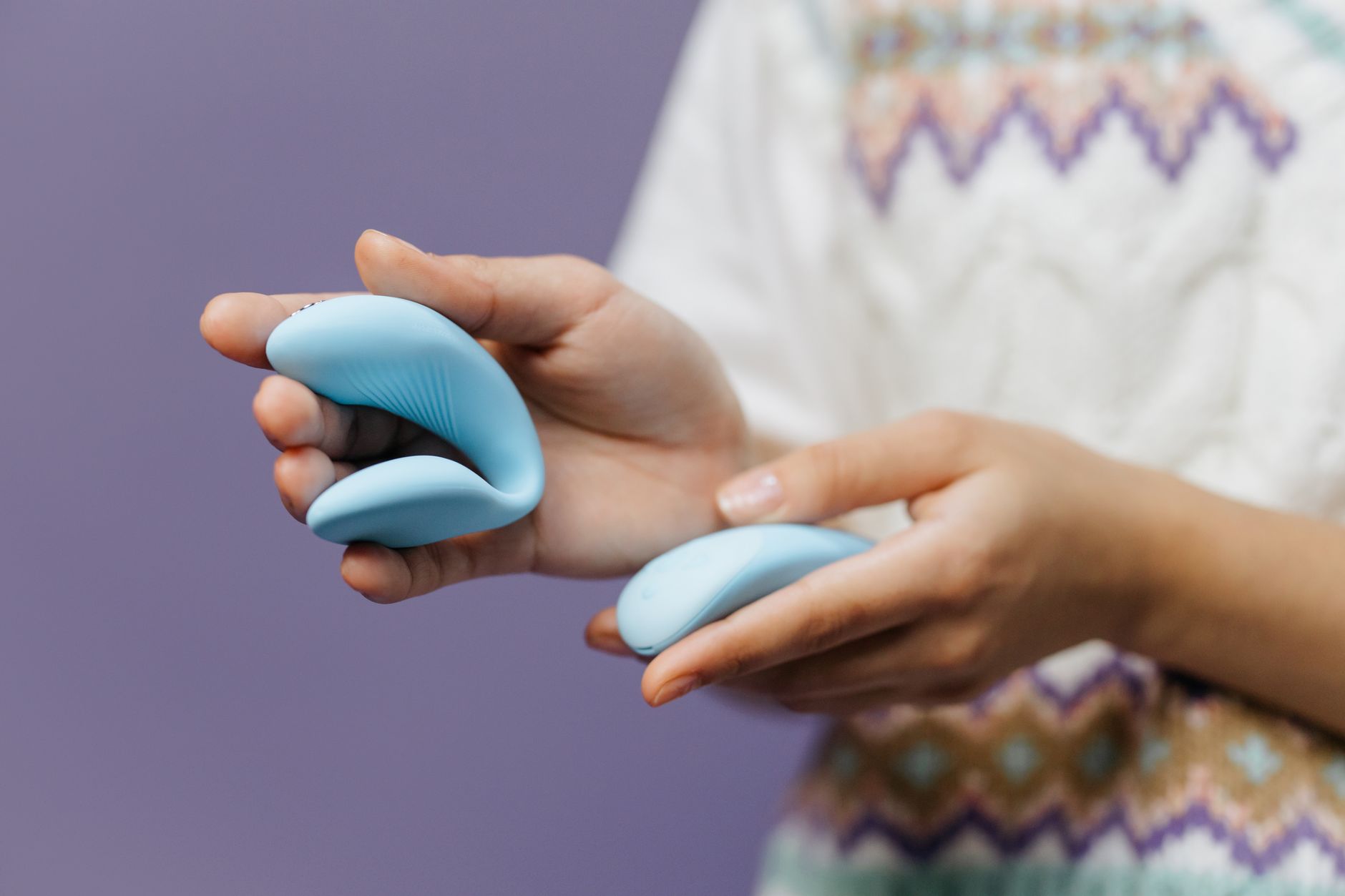
Let's name the actual fear
You want to introduce a lemon vibrator into sex with someone you're still getting to know. The fear isn't about the toy itself. It's about being perceived as too sexual, too demanding, or like you need something he can't provide. It's the worry that he'll feel replaced or inadequate. And underneath that is the worry that by asking for what you want, you'll somehow ruin the delicate early momentum of the relationship.
Here's what's actually true: people who get threatened by a toy are people showing you early data about how they handle your needs. And that's useful information.
Why the timing matters more than you think
There's a window where introducing a vibrator feels natural and one where it feels like an accusation. The difference is how established the sexual connection already is.
If you're three weeks in and still in the early exploration phase, bringing a toy to bed reads differently than if you've been sleeping together for two months and have a established rhythm. In the early phase, a vibrator can feel like "I'm bored" or "You're not doing it right." After you've built some sexual trust, it reads as "Here's something else we can do together."
Timing doesn't mean waiting forever. It means waiting until you've had enough sex that he knows your body responds to him, that you can come from penetration or his touch alone, that the physical connection is already real. Once that foundation is there, introducing a lemon clitoral vibrator becomes an expansion, not a correction.
The conversation actually works better when it's casual
Don't schedule a talk. Don't sit down with purpose and gravity. The worst thing you can do is treat this like a performance review.
The easiest opener is contextual. You're scrolling your phone and see something about toys. You mention it. "I saw this vibrator thing and honestly I'm curious about it." Or you're reading an article about pleasure and you say, "This is interesting, I never thought about it that way." Or the simplest: "I've been thinking about trying something new."
He'll either ask what or go quiet. If he asks, you get to answer. If he goes quiet, don't fill the space with apologies. Just let him process.
The magic line is this: "I think it could be fun for both of us. Like, not instead of you, but like, in addition to. Something we do together." That's it. You're not asking permission. You're describing a possibility.
What actually matters in his response
Listen for curiosity or defensiveness, not enthusiasm. If he asks questions, that's good data. "How does it work?" or "Would you show me?" means he's opening to it. If he says "Sure, whatever you want" without any actual engagement, that's different. That's him opting out of the conversation rather than into it.
If he genuinely seems uncomfortable, you get to ask why. Not to convince him, but to understand. Is it about feeling inadequate? Is it a moral or religious thing? Does he think vibrators are for people without partners? Is he worried it'll hurt? Most of these things can be talked through once you know what's actually going on.
What you're listening for is whether he can sit with something that makes him slightly uncomfortable because it matters to you. That's what partnership is. If the answer is no, that's information about compatibility.
How to frame it when you actually bring it out
The first time you introduce the lemon vibrator, keep it low-stakes. You're not making a production of it. You're not apologizing for it. You bring it out the way you'd bring out a condom or a different position.
"I want to try this" is enough. You don't need to explain why your body works this way. You don't need to justify it. If he asks how it works, show him. If he wants to hold it, let him. If he wants to use it on you, even better. That's him participating, which is usually where the defensiveness melts.
Many partners find that watching a toy work on someone is actually hot. It's visual. It's immediate feedback that she's enjoying herself. Plenty of people who are initially uncertain become genuinely into it once they see how it changes the dynamic.
The actual mechanics once you're doing it
Start with your partner already inside you or touching you or right there. Don't jump straight to the toy. The toy isn't the main event. It's additional sensation on top of what's already happening. Use a lemon vibrator on your clitoris while he's doing something else. That way it's not replacing him. It's layering onto him.
Or start solo while he watches. Some partners find it incredibly intimate to see someone they're with touch themselves. It's less about the toy and more about witnessing her pleasure. Once he's seen that, introducing him into it feels natural.
If you've read about using a lemon clitoral vibrator before and wondered about speed or pressure, start low. Let your partner see your response. If you're making noise or moving differently, he'll know it's working. He might naturally turn it up or move it around. Let him explore. Most of the anxiety dissolves once people realize the toy is just a tool, not a threat.
What to do if he gets weird about it mid-experience
If you sense him pulling back or getting quiet during sex, you can pause and check in. "You okay?" Sometimes he's just processing. Sometimes he needs a break. Either way, you've created space to actually talk instead of just powering through awkwardness.
If he asks you to stop using it, you stop using it. Full stop. This is where you find out if he respects what you want versus if he just tolerates it. If he stops you once and then never brings it up again, that's him not being ready. That might change in three months. It might not. That's information.
The bigger picture
You're not asking for much. You're asking for a partner who is curious about your pleasure, who can hold a five-minute conversation about sex toys without a crisis, and who isn't threatened by the fact that clitoral vibrators make you come faster or harder. A clitoral vibrator like the Lem doesn't replace him. It just means you get to feel really good, which actually makes you more present and into him.
The partners who get this often become the ones who actually last. Because they've shown you early that your pleasure matters to them. And that's the foundation of everything.
People also ask
Will my partner think I don't enjoy sex with him if I use a vibrator?
Not if you frame it correctly. The distinction that matters is this: you enjoy sex with him. The vibrator is a tool that makes you come differently, not a replacement for him. Most people figure this out within one or two experiences. Once he realizes the vibrator enhances the experience rather than diminishes his role, the defensiveness usually drops. That said, if he remains insecure about it, that's a sign the relationship might not be built on the kind of trust that survives other challenges either.
Should I introduce the vibrator during sex or talk about it beforehand?
Talk about it beforehand, but keep it genuinely casual. Not a scheduled conversation. Mention it while you're cuddling or cooking or driving. Let him have time to sit with the idea before it's physically in front of him. Some people need that buffer to move from "This feels threatening" to "Okay, I'm curious." Springing a toy out during sex without any conversation first almost always triggers defensiveness, even if he's fine with it in theory.
What if he says he wants to use the vibrator on me instead of letting me use it myself?
That's actually common and often a good sign. It means he wants to be involved and in control of the experience. Let him try. You can guide him ("A little faster" or "A bit more to the left") and he gets to see firsthand how you respond. This is often the bridge between nervous and comfortable. Once he feels the power he has in making you come with the toy, a lot of initial weirdness dissolves.
How do I know if he's secretly uncomfortable but pretending to be fine?
Watch for these signals: he goes silent or stiff during sex, he doesn't touch you as much, he stops initiating sex, or he becomes sarcastic about it afterward. These are signs he's not actually on board. If you notice any of these, check in directly. "I feel like something shifted. What's up?" Give him space to be honest. Sometimes people need time. Sometimes they need to know you're not forcing this on him. Sometimes they're just not compatible with what you want, and that's fair too.
Can a lemon vibrator actually help if I'm having trouble coming with a new partner?
Yes, absolutely. Lots of people find it harder to relax and climax early in a relationship because there's performance pressure. The vibrator removes some of that pressure because the sensation is so direct and physical that your brain stops overthinking it. If your partner can see that the vibrator helps you feel comfortable and present, that usually makes him feel better about the whole thing, not worse. How to Use a Lemon Vibrator When Arousal Takes Longer to Build covers this in depth.
What if I've never used a vibrator before and I'm worried I won't like it?
Try it alone first. Seriously. Don't let the pressure of a new partner's reaction be the first time you experience this. Spend time with the toy by yourself, figure out what patterns you like, get comfortable with how it feels. Then when you introduce it to your partner, you're not discovering it together. You're showing him something you already know you enjoy. That confidence changes everything about how he perceives it.
Is it weird to want to use a vibrator if we're already having good sex?
Not remotely. Good sex doesn't mean perfect sex. It doesn't mean unchanging sex. Sometimes you want to come a different way. Sometimes you want faster stimulation or a different type of sensation. That's not criticism of what he does. It's just variety. People add things to good experiences all the time. You don't keep eating the same meal because it's already good. You explore. Sex is the same.
When things click
The best outcome isn't him becoming obsessed with the vibrator. It's him understanding that you're allowed to want what you want, that asking for it doesn't threaten him, and that your pleasure is something worth paying attention to. Those partners typically stick around. Because they get it. And they know how to listen.
If you're rebuilding trust after relationship strain, How to Use a Lemon Vibrator When Reconnecting With a Partner After Emotional Distance walks through how toys can be part of that reconnection. But for now, just know this: you're not asking for too much. You're asking for basic respect and curiosity. And if he can't give that over a vibrator, he can't give it elsewhere either.
Your pleasure matters. So does this conversation. Have it.