
Here's the conversation nobody wants to have
Your partner wants sex once a month. You want it three times a week. Neither of you is broken, neither of you is wrong, and somehow that's exactly what makes it hurt. You start interpreting their low desire as rejection of you. They start feeling pressured and shut down more. The cycle tightens until someone brings up toys and suddenly it feels like an insult instead of a solution.
Libido mismatch is one of the most common relationship complaints I hear. It's also one of the most fixable, but only if you stop treating it like a problem to solve together and start treating it as a logistics question.
Why libido mismatch isn't about attraction
Let's get this out of the way first. Your partner's lower desire has almost nothing to do with how attractive they find you. Research on long-term couples shows that desire gaps stem from stress, medication, hormones, past sexual shame, energy depletion, and sometimes just a genetic difference in baseline sex drive. None of those things improve when you make them about attraction.
Here's what happens in most mismatched-libido couples. The higher-desire partner starts initiating more, interpreting each decline as personal rejection. The lower-desire partner feels mounting pressure and shame, which tanks their desire further. Within six months, the relationship has become a minefield of silent resentment.
A tool like a Lemon vibrator doesn't fix that dynamic. But it does something better. It removes the pressure to perform at a frequency that works for your partner, which paradoxically is often what lets lower-desire partners actually reconnect with their own sexuality.
The permission structure that changes everything
I recommend a specific conversation structure with partners who have different desire levels. It sounds like this:
"I've been thinking about how often we have sex, and I realised I've been making it feel like a reflection on you. It's not. I need more sexual release than you do right now, and that's okay. I'd like to use a vibrator on nights when you're not interested. That doesn't mean I don't want you. It means I'm taking responsibility for my own body instead of waiting for yours to be ready."
Notice what's missing. No blame. No suggestion that their desire will grow if they just try harder. No implication that the toy replaces them. Just a statement of need and a boundary.
The lower-desire partner often feels genuine relief at this point. Suddenly they're not the gatekeeper of your sexuality. They're not responsible for meeting a need they don't have. And weirdly, when the pressure lifts, desire sometimes returns. Not always, but often enough that I've seen couples go from miserable to actually connecting again.
How to use a Lemon vibrator without it becoming weird
Four practical things I tell couples:
1. Do it in the bedroom when they're present, but reading or doing something else. Not hidden in the bathroom like shame. This normalises your pleasure as a standalone thing, not an alternative to them. Some partners find it hot. Some find it neutral. Both are fine. You're not asking them to participate. You're just refusing to disappear.
2. Choose a time when you have energy and they've explicitly said no. Don't use it as a hinted suggestion. "I guess I'll use my vibrator then" is guilt-tripping. Actually waiting for a genuine decline, then following through without fanfare, is respectful. The Lemon is designed for quick, efficient stimulation, so you're not taking an hour. Fifteen to twenty minutes, then you're done.
3. Keep the emotional labour separate from the physical relief. This is crucial. Your need for emotional intimacy and your need for sexual release are different conversations. If you're using a vibrator to avoid addressing a deeper disconnection, that's a different problem. But if your bodies just want sex at different frequencies, a tool is honest.
4. Don't expect it to solve the relationship. A Lemon vibrator is a logistics solution, not a therapy solution. If your partner's low desire stems from resentment, depression, or a lack of connection, the vibrator helps with the symptom, not the root. That requires actual conversation or professional help.
What this actually allows
When I see couples navigate this successfully, three things shift:
First, the higher-desire partner stops feeling rejected all the time. You're no longer dependent on your partner's body to access your own sexuality. That's genuinely freeing. You get to want sex, get that need met, and then be present for the rest of your relationship without resentment.
Second, the lower-desire partner often reports less shame. They're not failing you. They're not broken. They just have a different baseline, and you've found a way to honour both of you.
Third, paradoxically, the couples I work with often report that their partner's desire eventually increases slightly. Not because the toy is magic, but because the pressure vanishes. When sex stops feeling like a performance requirement and starts feeling like something that happens occasionally out of genuine interest, people relax into it.
When a vibrator isn't enough
If your partner's low desire is tied to depression, medication, past trauma, or they're actively withholding sex as a control tactic, a Lemon vibrator won't fix that. Those situations need a sex therapist or couples counsellor who understands desire, not just technique.
But if the mismatch is simple biology, stress, or just different baseline drives, a clitoral vibrator like the Lemon gives you both something: you get reliable pleasure without depending on a partner who isn't interested, and they get to stop being the keeper of your sexuality. It's not romantic. It's practical. And honestly, in a long-term relationship, practical often matters more.
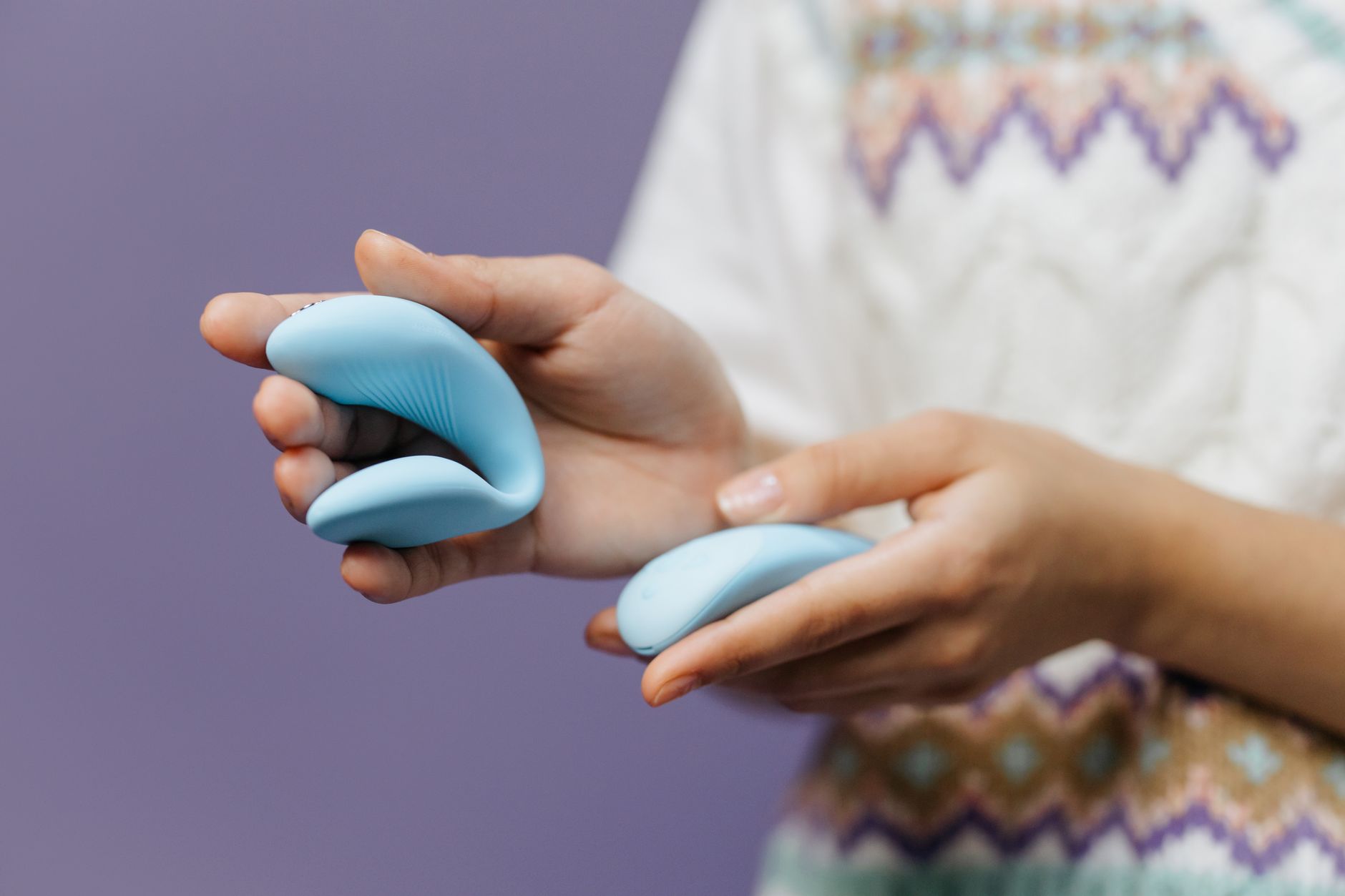
Photo by cottonbro studio on Pexels
The conversation after you've used it
Don't make it weird. You don't need to debrief or ask permission next time. Just be matter-of-fact. "I used the vibrator last night, felt good, I'm good now." That's it. The goal is to make it as unremarkable as any other form of self-care.
Some partners will eventually ask to be involved. Some won't. Both outcomes are fine. The tool exists to reduce resentment and pressure, not to stage-manage your partner's interest in your body.
Why the Lemon specifically works here
A lemon clitoral vibrator is efficient. The suction-based stimulation is more focused than vibration alone, so you reach climax faster with less build-up time. When you're using it specifically because your partner isn't interested in sex right now, that efficiency matters. You're not asking for an hour of solo time. Fifteen minutes and you're done.
It's also discreet and quiet, which matters if you share a bedroom or if you want to use it without broadcasting. The design is elegant enough that it doesn't feel clinical. You're using a tool, not medicating yourself.
The bigger picture
Libido mismatch ends relationships that were otherwise solid. Not because the sex itself matters, but because the resentment that builds around it poisons everything else. When you remove the pressure and the guilt, when you both stop performing and start being honest about what you actually need, the relationship often heals.
A vibrator alone won't do that. But it can be the permission structure that lets both of you stop fighting about desire and start talking about connection. That's worth trying before you decide the mismatch is unfixable.
Frequently asked questions
Will using a vibrator make my partner feel like they're being replaced?
Only if you frame it that way. If you present it as "I need sexual release more often than you do, so I'm handling that myself," it's clear you're solving a logistics problem. If you use it as a passive-aggressive response to their low desire, yes, it'll feel like rejection. The tone and context matter more than the tool.
Should I hide that I'm using a vibrator?
No. Hiding it implies shame, which invites shame in your partner. Matter-of-fact acknowledgement normalises it. "I'm going to use my vibrator tonight" is just information. It's the opposite of secretive.
What if my partner feels hurt or threatened by the idea?
That's worth exploring together, ideally with a sex therapist. Sometimes the hurt is about feeling replaced or inadequate. Sometimes it's tied to old shame about sex. But hurt feelings shouldn't stop you from meeting your own needs. The conversation needs to happen, but your pleasure isn't negotiable.
How do I bring this up without it sounding like criticism?
Lead with your need, not their deficit. "I need sexual release more often than we're having sex" is different from "You don't want me enough." One is about you. The other is an accusation. Stick to the first.
Can a vibrator actually make our sex life better?
Yes, if it removes pressure and resentment. No, if deeper disconnection exists. Be honest about which situation you're in before you assume a tool will fix the relationship.
What if we never get back in sync on desire?
Then you've got real choices to make. Some couples live with a permanent mismatch and find tools that work. Some couples decide it's incompatible. But either way, you'll make that decision from a place of honesty, not resentment. That matters.
The point
Libido mismatch doesn't mean your relationship is broken. It means you need to stop waiting for your bodies to synchronise and start building a framework where both of you get what you need. For you, that might mean a Lemon vibrator and the permission to use it. For your partner, it means freedom from the pressure of being your only outlet for sexuality. Build that framework, and you'll be surprised how much of the relationship actually heals.
If you're navigating a deeper disconnect beyond simple desire mismatch, reach out to talk through your situation. Sometimes a conversation with someone trained in relationship dynamics makes all the difference.