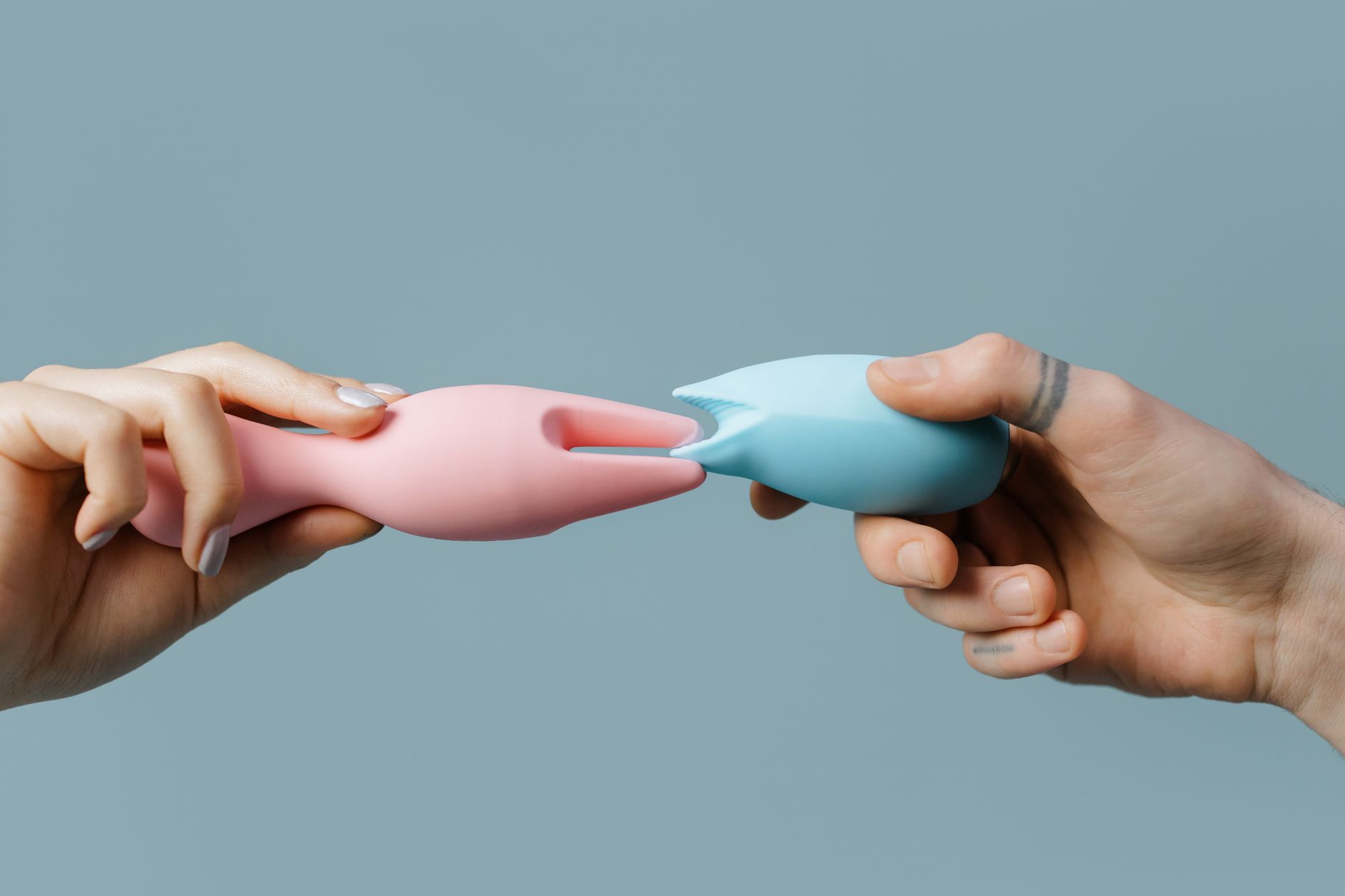
Let's talk about the elephant in the room
New partner, new body, new everything. And suddenly your orgasm feels like a performance review you're going to fail. That weight—the weight of proving you're responsive, that you enjoy it, that they're doing something right—lives in your nervous system. And your nervous system is not great at orgasming when it's running a quality-control checklist.
Here's what I see in my practice: people who used to come reliably hit a new relationship and suddenly can't. Not because anything's wrong with them. Not because the sex is bad. But because the self-consciousness has moved in.
Why new partners mess with your pleasure response
Your body is exquisitely attuned to safety. When you're with someone new, even someone you like, your nervous system is still asking questions: Do I trust them? What if I look weird when I orgasm? What if it takes too long? What if nothing happens? That background hum of uncertainty creates what therapists call "spectating"—you're watching the sex happen rather than being inside it.
The clitoris is packed with roughly 8,000 nerve endings, all of them wired to your brain. When your brain is distracted by performance anxiety, those nerves get muted. Not broken. Just... muted. The pleasure signal is still there. Your nervous system is just turning down the volume.
Add partner inexperience to the mix—they don't know your body yet, you don't know what they're doing—and the gap between what feels good and what you're receiving gets wider.
Why a lemon vibrator changes the dynamic
A clitoral vibrator like the Lem isn't a workaround. It's a permission slip. Here's what it does:
It removes the "am I taking too long" anxiety. Your partner isn't manually stimulating you anymore. The vibrator is. Suddenly, your body's timing isn't a problem to be solved. It's just... what's happening. That psychological shift alone matters more than you'd think.
It creates consistent, reliable sensation. A partner's hand gets tired. The rhythm changes. The pressure wavers. A lemon clitoral vibrator does the same thing, reliably, for as long as you need. Your nervous system doesn't have to worry about whether the input is going to suddenly stop or change. Predictability is calming.
It gives you control without negotiation. You can adjust speed, intensity, placement. You don't have to say "a bit more to the left" or "softer, please." You just do it. That autonomy in your own pleasure is enormously grounding.
It depersonalizes the moment just enough. Counterintuitive, I know. But focusing on a vibrator's sensation rather than your partner's face means your nervous system has something concrete to lock onto instead of monitoring their expression for approval. The intimacy is still there. The pressure is gone.
How to introduce it without awkwardness
If you're worried about bringing a lem vibrator into bed with someone new, that worry is loud in your head and utterly silent in reality. Here's what actually happens:
You say: "I'd like to use my vibrator when we have sex. It helps me come." And then you watch your partner's face. Most of the time you'll see relief. Relief that they're not the problem. Relief that there's a solution. Relief that they don't have to perform magic with their fingers.
Bad partners get weird about toys. Good partners get curious. If someone new reacts badly to a vibrator, you've learned something useful about them in a low-stakes way.
When you're actually together, you can hand it to them and show them where it feels good. Or keep it in your control. Both are fine. There's no script here.
What actually works with a new partner
Four things change the game:
Start with a lemon vibrator before you're with your partner. Spend time with it alone. Know what feels good. Know what speed you like. Know where the sweetspot is on your body. This isn't selfish. This is preparation. You're gathering intelligence about your own pleasure so you're not learning it in real time with an audience.
Use it during foreplay, not as a last resort. Bring it in early, when you're already aroused but before you're in penetration. This normalizes it. It's not "we tried everything and now we're using the backup plan." It's just part of what you do together.
Tell them what's happening. "I'm going to use this because I want to come" is different from silently reaching for it like it's a secret. One is confident. One reads as ashamed. Your partner will take their cue from you.
Let them help. Some people like their partner to hold the vibrator. Some like to do it themselves while the partner is inside them or touching them elsewhere. Some want to be alone with the vibrator and their partner just close by. All of this is normal. You get to decide what feels intimate.
The nervous system angle
As a therapist, I spend a lot of time talking about nervous system regulation. When you're with someone new, your fight-or-flight response is ramped up. Your parasympathetic nervous system—the one that handles pleasure and relaxation—is on a dimmer switch.
A lemon clitoral vibrator is a nervous system hack. It gives your brain something to focus on that isn't "am I performing well?" It creates a feedback loop of reliable sensation that gradually calms your threat-detection system. After a few times, your body learns that this is a safe space to let go.
Plus, when you actually have an orgasm, that's a massive nervous system reset. Your body learns: "Oh, I'm safe here. I can relax. I can come." That memory sticks around for next time.
When to get your partner involved
After a few solo experiences with the vibrator during sex, you might want your partner more engaged. They could use it on you. They could do other things while you use it. They could hold you while you come. There's no timeline here. Your comfort is the only schedule that matters.
If you're using a lemon vibrator with a new partner who feels nervous, remember that they might also be in their own headspace about performance. A vibrator can actually ease that pressure on them too. They're not solely responsible for your pleasure anymore. That's a gift to both of you.
The longer conversation
Honestly though, a vibrator isn't a substitute for communication. You still need to tell your partner what feels good, what doesn't, what you want more of. The vibrator just removes one layer of performance anxiety so you can actually hear your body underneath it.
If you find that even with a lemon vibrator you're not coming, or you're not interested, that's worth exploring separately. Sometimes new-relationship anxiety is the culprit. Sometimes it's chemistry. Sometimes it's something else entirely. A vibrator can help. But it's not magic.
What it is: permission. Permission to prioritize your pleasure. Permission to take your time. Permission to not perform. And often, that's enough to let the rest unfold naturally.
FAQ
Can I use a lemon vibrator if I'm worried my partner will feel replaced?
Your partner's insecurity is their work, not your responsibility. That said, framing matters. "I want to use this so I can come and feel better" is information. "I need this because you're not doing it right" is criticism. One opens the conversation. One closes it. A good partner will understand the difference. If yours doesn't, that's data.
Should I use the vibrator every time we have sex?
Absolutely not. Use it when you need it. Skip it when you don't. As you relax into the relationship, you might find you need it less. Or you might find you like it every single time and that's fine too. Your body gets a vote.
What if my orgasm is still hard to reach even with a vibrator?
First, make sure you're giving yourself enough time. New-relationship nerves can mean orgasm takes 20 minutes instead of 10. Second, check in with your body's stress level generally. If you're anxious or overwhelmed outside the bedroom, that bleeds into sex. Third, some antidepressants and other medications affect sensation. If that's you, talk to your doctor about timing or alternatives. A lemon vibrator helps. But it's not solving everything on its own.
Is it weird to orgasm with a vibrator when your partner is inside you?
Nope. Lots of people come that way. It's called blended stimulation and it's extremely common. Your partner will probably think it's incredibly hot. If they don't, see the earlier answer about insecurity being their work.
How do I know if a lemon clitoral vibrator is right for me?
If you're someone who reliably comes from clitoral stimulation alone (even if it takes time), a lem vibrator is probably your person. If you're someone who's never orgasmed, or who comes inconsistently, or who finds direct clitoral stimulation too intense, a vibrator might help. The only way to know is to try. Most people who use a lemon vibrator report stronger, faster, more consistent orgasms. That's not a coincidence.
Should I tell a new partner before or after we've had sex once?
Before is usually easier. "Hey, I like to use a vibrator during sex" is information. Pulling one out mid-encounter reads as more significant than it is. But if it comes up organically during sex, that's fine too. What matters is that it's not a secret. Secrets create shame. And shame kills pleasure.
You deserve pleasure on your own terms
New relationships are scary. New sex is scary. The pressure to be responsive, to enjoy it, to come, to prove something—it's a lot. A lemon vibrator isn't about faking anything or bypassing intimacy. It's about creating space for your nervous system to actually relax so your body can do what it knows how to do.
Your partner wants you to feel good. The vibrator helps make that possible. That's the whole story.