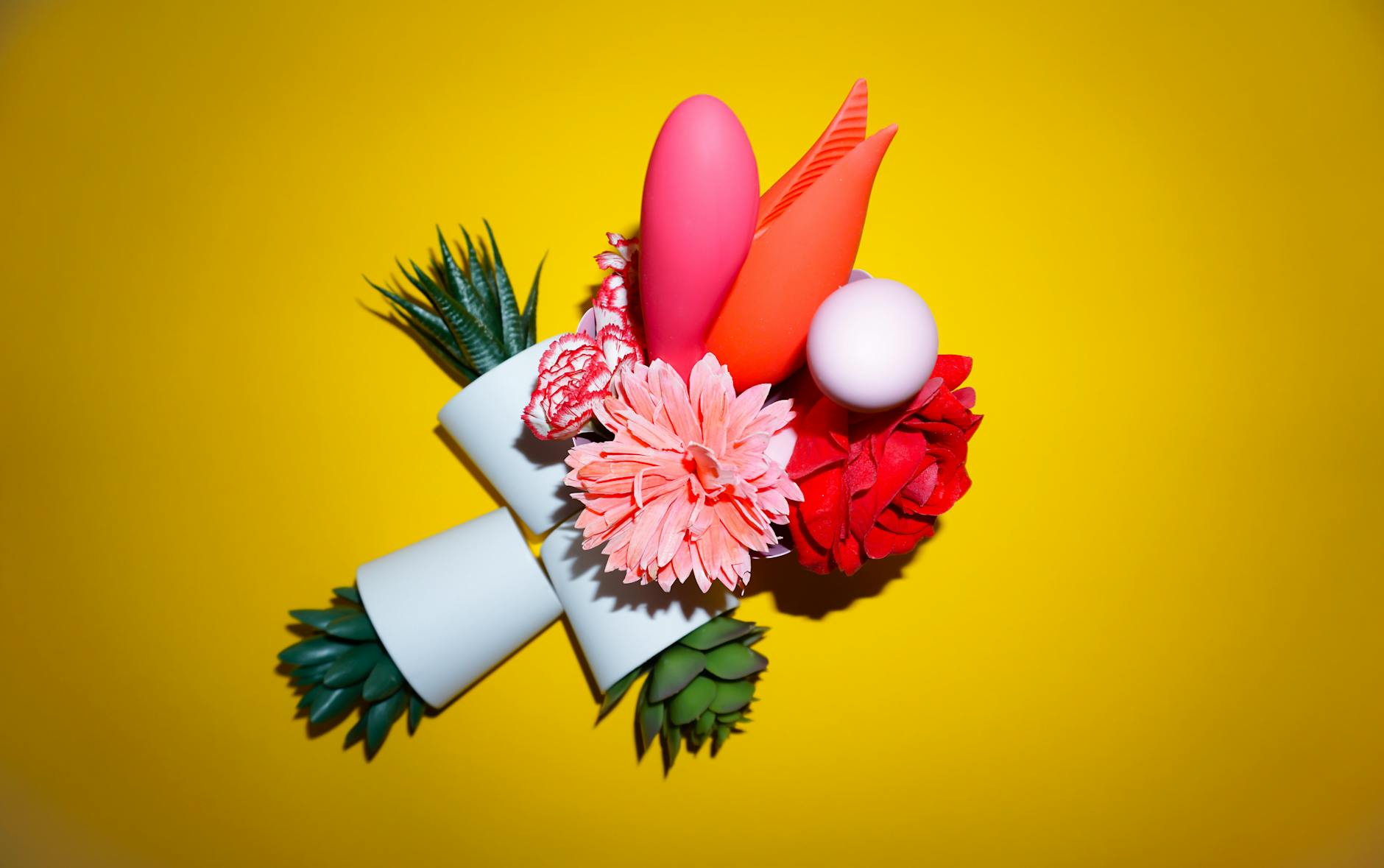
The thing nobody tells you about sex after divorce
Your body feels like a stranger's. That's the real shock. Not the loneliness, not the logistical mess. It's the fact that you've spent 10, 20, 30 years having sex one way, in one dynamic, with one person, and now that's gone. And your nervous system doesn't know how to do this anymore.
When a marriage ends, especially if sex has become a fraught or obligatory thing, your sexual self takes a backseat. You stop thinking about what your body wants. You stop touching yourself. Desire becomes something theoretical. And when a new partner eventually appears, the expectation is that you'll just switch back on.
You won't. And that's not failure. That's normal.
Here's what I see in my practice: people rebuilding after divorce need to go back to square one. Not because they're broken, but because they haven't had permission or space to explore what they actually like for themselves. A lemon vibrator, or any clitoral vibrator, becomes a tool for that reclamation. It's not about performance for someone else. It's about remembering that your pleasure matters.
Why post-divorce bodies struggle with sensation
Three things happen after a long-term relationship ends:
1. Disconnection is real. You've trained your body to suppress sensation as a coping mechanism. Maybe sex became something you endured. Maybe intimacy felt unsafe. Your nervous system learned to shut down, and that pattern doesn't vanish the moment the divorce is final. It takes active rewiring.
2. Shame is louder. Post-divorce, there's often an undercurrent of "I should have seen this coming" or "Something was wrong with me." That shame lives in your body. It makes you tense. Tension makes pleasure harder to access. This isn't psychological jargon. This is basic neurology.
3. You've forgotten what solo pleasure feels like. When sex has been partnered for decades, masturbation often stops entirely. You don't have a recent template for what turns you on, what rhythm works, what intensity feels good. You're starting from zero muscle memory, even though your body has had millions of orgasms.
The case for solo exploration first
Before introducing anyone new into your sexual landscape, you need to know your own map again. This isn't about being selfish. It's the opposite. It's about showing up whole instead of fragmented.
A lemon vibrator is a sensible starting point because it's straightforward. No intimidating bells and whistles. No learning curve on "how to use it." You turn it on and it does one thing really well: targeted clitoral stimulation. That simplicity removes decision fatigue.
Set aside 20 minutes when you're alone, rested, and not stressed. Not when you're trying to squeeze it in before bed or before your kids come home. Actual space. Actual permission.
Start with the Lem on the lowest setting. The suction pattern is gentle, nothing jarring. Your body might take 10, 15, even 20 minutes to wake up. That's fine. You're not trying to reach an orgasm on a timeline. You're relearning what sensation feels like when nobody's watching and nothing's required.
If nothing happens, that's information, not failure. Write it down. "Felt numb." "Felt anxious." "Felt good but no finish." These are data points. You're building a picture of where your nervous system is right now.
Reconnecting with your own pleasure language
After a few solo sessions with a lemon vibrator, you'll start to notice patterns. Maybe you need longer warm-up time. Maybe certain patterns feel better than others. Maybe you need to be lying down, not sitting. Maybe you need to start with your hand first, then introduce the vibrator.
These details matter. Write them down. Literally. "Better in the evening than morning." "Prefer side-lying position." "Need the lollipop-shaped tip better than a wand." This becomes your personal manual. When a new partner eventually asks "What do you like?", you'll have real answers instead of "I don't know, I've never really thought about it."
You're also learning that pleasure is something you can give yourself. That's radical if you've spent decades treating sex as a relational thing. Pleasure is a solo skill first, a partnered skill second. You have to know how to get there alone before someone else can reliably help you get there with them.
When you're ready to introduce a partner
There's no timeline for this. Some people are ready for dating six months after separation. Others need two years. The question isn't "How long should I wait?" The question is "Can I have sex without falling back into old patterns of obligation or shame?"
When that's true, and you're dating someone you actually like, this is how to navigate toys together.
Tell them in advance. Not during sex. Not as a surprise. A casual conversation over dinner or a text before they come over works. "I've been using a lemon vibrator for my own pleasure. I'd like to use it if we're together. Is that cool?" If they react badly, that's diagnostic information. A good partner celebrates your pleasure. Full stop.
Let them see it first. Remove the taboo. Show them the Lem. It's a small, pretty thing. Looks like a stone or a toy, not medical equipment. Normalizing it now means it doesn't feel weird later.
Start solo with them present, not together. This is the bridge step. You use it on yourself while they watch. This does two things. One: you get to experience pleasure without the pressure of "performing" for them. Two: they get to see what you actually respond to. Your real breath, your real movements, your real face. No performance.
After that, you can explore together. Maybe they use it on you. Maybe you use it together with their hands or their mouth. But you lead this evolution, not them.
The specific fear that shows up
I hear this often: "Will my new partner think I need the vibrator because they're not enough?"
No. That's divorce residue talking. That's the voice that says you weren't good enough to keep your marriage together. That voice lies.
A lemon vibrator isn't a replacement. It's an amplifier. It helps you reach orgasm faster, more reliably, and with less effort. That's not a dig at your partner. That's physics. Suction stimulation is incredibly effective for clitoral pleasure. A partner's hand or mouth is intimate and wonderful. They're different tools for the same goal.
A good partner gets that. They might even be relieved. Sex gets better when you're not faking it or waiting passively for something that might not happen. When you can actually come, the whole experience becomes more fun for both of you.
Common stumbling blocks and how to navigate them
You feel guilty using it solo. This usually comes from an old message that masturbation is weird or selfish. Reframe it. You wouldn't feel guilty brushing your teeth or exercising. This is self-care. It's health. Pleasure is a physical need, not a luxury.
You try it once, nothing happens, and you give up. Your nervous system is still in protection mode. Healing isn't linear. Take a week off. Try again. And if it still feels inaccessible, that's worth discussing with a therapist. Sometimes the disconnect goes deeper than solo work can reach.
Your new partner wants to use it right away, and you're not ready. Say so. "I'm still figuring out my own stuff. Give me another month." A partner who respects that boundary is a keeper. One who pushes is showing you who they are.
You orgasm with the vibrator solo but can't with your new partner. Again, normal. Solo pleasure and partnered pleasure use different neural pathways. You might need a lemon vibrator during partnered sex too, at least at first. That's adaptive, not broken.
Why this matters for real
Divorce is a rupture. Your sexual self gets caught in the break. For most people, that part of identity doesn't naturally reassemble. You have to do the work intentionally.
Using a lemon vibrator isn't about the vibrator. It's about telling your body and your brain that your pleasure is worth protecting. That you're worth the time, the attention, the vulnerability. That statement, made solo and then eventually with a new partner, rewires something fundamental.
You're not "getting back out there." You're building a new sexual self. And that new self gets to be better than the old one. Because you know what you want now.
Frequently asked questions
How long should I use a lemon vibrator solo before trying partnered sex again?
There's no magic number. I usually suggest at least four to six weeks of regular solo exploration, maybe twice a week. That gives your nervous system time to recognize pleasure as safe again. But if it takes three months, that's fine too. The goal isn't speed. The goal is real reconnection.
What if I can't reach orgasm with a lemon vibrator, even after weeks of trying?
First, check if you're expecting one. Sometimes the goal is just sensation and pleasure, not climax. Reframe success as "I felt something" not "I came." If you genuinely feel nothing even on higher settings, check two things. One: are you taking medications that affect sensation? Antidepressants, antihistamines, and birth control can all numb pleasure. Two: is anxiety still running the show? If yes, solo work with a therapist might help more than a vibrator right now.
Can I use a lemon vibrator during partnered sex, or does that feel like I'm not into them?
Absolutely use it during partnered sex. Many people need clitoral stimulation to orgasm during intercourse, and a vibrator solves that elegantly. Frame it as "This helps me get there" not "You're not enough." If a partner feels threatened by that, that's a compatibility issue, not a you issue.
My new partner wants to control the vibrator, and I feel like I'm losing control of my own pleasure. Is that normal?
It's a red flag. Your pleasure is yours to direct. A partner can participate, but you should always be holding the tool or guiding it. If you feel pressured to hand over that control, check in with yourself about why. That instinct to defer your own needs to someone else's preference is a pattern worth breaking.
Should I buy the expensive vibrator or a cheaper lemon toy to start?
If you're testing the waters, a mid-range lemon clitoral vibrator like the Lem gives you quality and durability without overcommitting. Cheaper vibrators often feel plasticky and fail fast. Expensive ones might have features you don't need. The Lem hits the sweet spot: simple, reliable, well-designed. You're not wasting money, and you're getting a tool you'll actually use.
What if I'm nervous about my new partner seeing me use a vibrator?
That nervousness is normal. The antidote is slow introduction. Show them the toy before sex. Explain why you use it. Let them ask questions. Make it boring and ordinary, not secretive and weird. Once it's just part of your sexual landscape, the nervousness usually melts away. And if your new partner shames you for it? That's a sign to walk away.
Moving forward
Divorce changes you. It strips away assumptions about who you're supposed to be and what sex is supposed to look like. That loss is real. But the space it creates is also real.
A lemon vibrator isn't going to heal your divorce. But it's a tangible, physical way to start rebuilding trust in your own body. Solo pleasure first. Then partnership. Then a new version of sex that belongs to you, not to some old version of your life.
That's worth the work.