Let's start with the hardest part
Cancer treatment damages more than tissue. It damages your relationship with your own body. You've spent months or years fighting. Your body has been prodded, scanned, poisoned, or cut. Reclaiming pleasure after that requires a different kind of courage than the courage you used to survive.
Here's the truth nobody tells you: rebuilding your sex life after cancer is possible. It's also not a return to what was. It's a rebuild. And that rebuild, done slowly and with permission, can be deeper and more intentional than what came before.
What cancer treatment actually does to sexual function
The damage varies wildly depending on your treatment. Chemotherapy can cause vaginal dryness, thinning of tissue, and early menopause. Radiation in the pelvic area causes scarring and reduced blood flow. Surgery removes tissue or nerve endings. Hormonal therapies block estrogen or testosterone, shrinking sexual desire and physical response.
Then there's the psychological part. Your brain now associates your body with threat. Touch triggers hypervigilance. Intimacy feels vulnerable in ways it never did before.
Most oncologists don't ask about sex. Most therapy teams don't bring it up. So you're left wondering if it's normal that you can't orgasm anymore, or if you're broken.
You're not broken. Your nervous system is recalibrating.
Why a lemon vibrator works differently in recovery
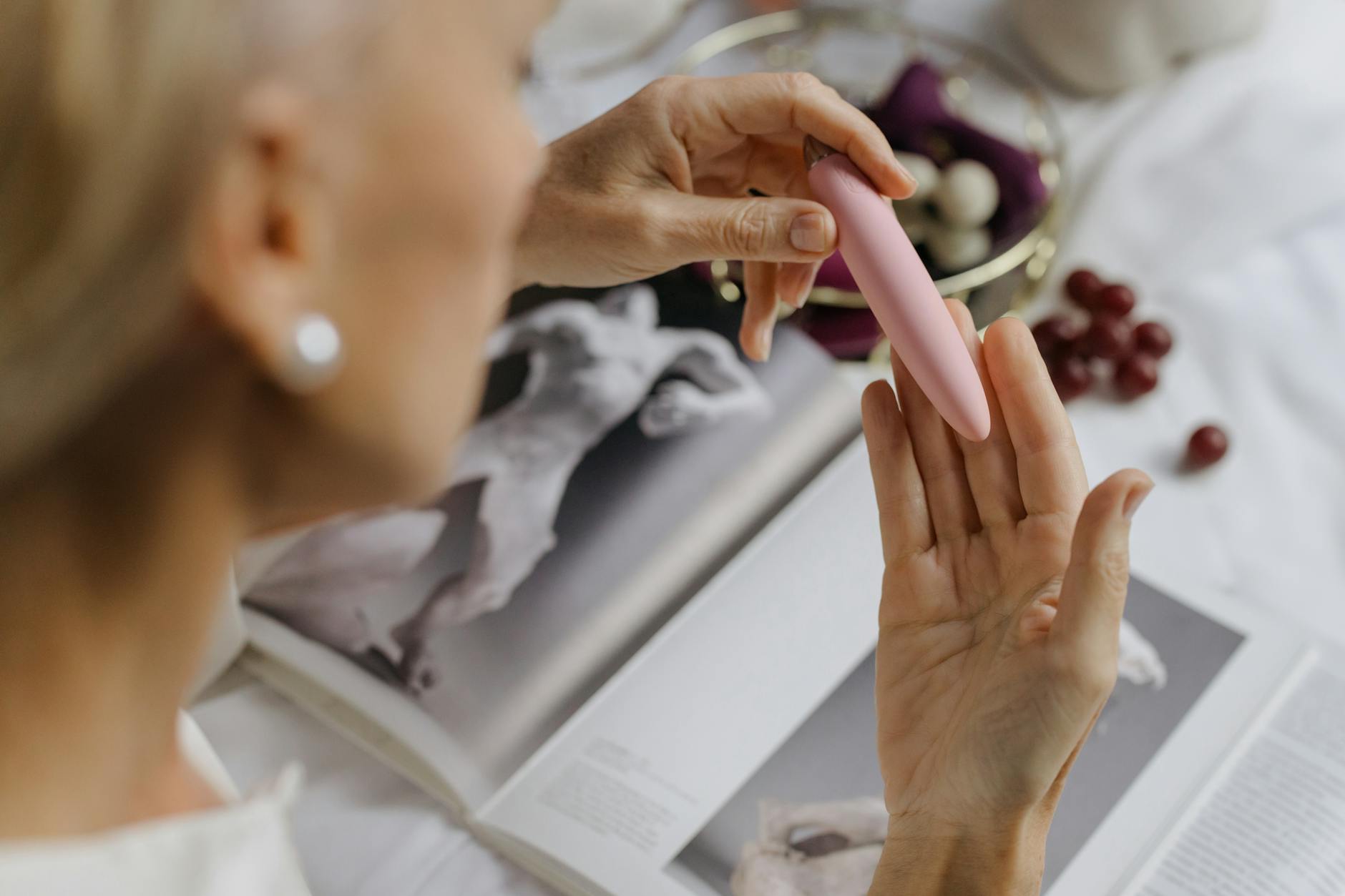
A lemon clitoral vibrator is useful here for three reasons that matter specifically to post-cancer bodies.
First, the suction mechanism bypasses friction entirely. If you have scar tissue, vaginal atrophy, or radiation-induced changes, direct stimulation can hurt. Suction stimulates the clitoral complex without mechanical pressure. It's gentler and often effective when nothing else has worked.
Second, you control the intensity completely. Start at pattern 1. Stay there for weeks if you need to. Nobody rushes you. With a partner's hand or mouth, there's pressure to perform or communicate constantly. With a tool you operate yourself, you can pause whenever you need to, with zero negotiation.
Third, using a tool externalizes the experience. It's not your body doing something. It's a device helping your body. That psychological distance is profound for people carrying trauma.
Building tolerance before pleasure
Before you use a lemon vibrator for orgasm, you might need to rebuild basic sensation tolerance.
Start with touch exploration, not sexual touch. That means touching your own body in non-sexual contexts. Lotion on your arms. Your hand on your collarbone. A soft texture against your thigh. The goal isn't arousal. It's proving to your nervous system that touch is safe.
Do this for a few weeks before introducing any tool.
Then, introduce the lemon vibrator in a completely non-sexual way. Hold it. Turn it on at the lowest setting. Place it near your body without using it. Let your nervous system get used to the sensation and the sound. Many people find that the anticipation is harder than the actual experience. Removing the performance aspect reduces that load significantly.
When you're ready to use it for sensation, start outside the vulva. Inner thigh. Outer labia. Everywhere except the clitoris. This is called "expanding your sensation map" and it's essential after cancer treatment because it reconnects you with parts of yourself that feel safe.
The role of lubrication and timing
After cancer treatment, your body might not produce lubrication naturally, or it might produce it unreliably. Water-based lubricant isn't optional here. It's foundational.
Also shift your expectations about arousal timelines. Before treatment, arousal might have happened in minutes. Now it might take 30, 40, even 60 minutes. That's not dysfunction. That's your body being cautious, and caution is wise.
Use the time. Don't compress it. Build it into your routine. This is why rebuilding after cancer often requires relationship renegotiation. Your partner needs to understand that your pace now is your real pace, not a temporary slowdown.
Start sessions when you have time. Afternoon weekends work better than late nights because you're less tired and your nervous system is calmer. Warm baths before help. Some people find it easier to begin after mild exercise, when blood flow has increased naturally.
When to involve your partner
If you have a partner, the question of when and how they participate is crucial.
My recommendation: do solo exploration first. Weeks of it. Your partner doesn't need to watch or participate. They need to give you space to reconnect with your own pleasure without their presence adding performance pressure.
Once you've had several orgasms alone and feel confident, you can gradually include your partner. That might mean they're in the room but not touching. Or they're touching you in other ways while you use the lemon vibrator. Or eventually, you use it together.
Move at your speed, not a speed that feels "normal." There is no normal here.
Managing shame and body image shifts
Cancer changes how your body looks and feels. Scars, hair loss, weight changes, missing parts. The lemon vibrator itself can become a source of shame if you feel like you "shouldn't need" it to experience pleasure anymore.
That shame is common and completely unfounded. You're not broken. You're using a tool to help your nervous system feel safe. That's wisdom, not weakness.
One exercise I recommend: spend time looking at your own body without judgment. Not critically, not to "accept" it, but to observe it. Notice texture, temperature, sensitivity. This isn't about loving what cancer did. It's about separating the trauma narrative from the physical reality.
When you touch yourself or use a lemon vibrator, you're not erasing what happened. You're proving that your body still contains pleasure despite what it survived.
Common obstacles and how to move through them
Pleasure might trigger grief. You might orgasm and then cry. That's normal and healthy. Grief and pleasure aren't opposites after cancer. They coexist.
Numbing is common too. You might feel nothing initially, even with stimulation. That usually means your nervous system is still in protective mode. Don't push. Rest. Come back in a few days. Sensation often returns when you stop trying so hard.
Flashbacks or anxiety during arousal can happen. If this occurs, pause immediately. Don't push through. Your body is telling you it needs more time. That's information, not failure.
Dyspareunia, or pain during sexual activity, affects many people post-treatment. If pain appears, see a pelvic floor physical therapist. Many post-cancer patients have significant tension in the pelvic floor as a protective response. A therapist trained in cancer recovery can teach you to release that tension. It often takes 8-12 sessions, and it's worth every one.
Rebuilding with a partner after treatment
If you're rebuilding intimacy with someone, that requires parallel work from them. Your partner needs to grieve too. They might feel guilt, fear of hurting you, or their own sense of loss about the person cancer took from your relationship temporarily.
Having conversations about this separately from sexual exploration helps. A therapist specializing in cancer recovery can guide these conversations more effectively than trying to sort it out alone.
When you do explore together, remember that your partner's touch and a tool's touch are two different things. One isn't inferior. They're different modalities. Using a lemon vibrator with a partner isn't a replacement for their physical intimacy. It's an addition.
When professional support matters
If you're struggling to rebuild pleasure after cancer, a sex therapist specializing in cancer recovery can be transformative. They understand both the physical and psychological dimensions. They won't push you toward predetermined outcomes. They'll help you define what pleasure means for your body now.
Some people find that talking to other cancer survivors who are rebuilding intimacy helps too. Organizations like Cancer Survivors' Network offer peer support specifically around sexuality after treatment.
Rebuildng takes time. You're not on anyone's timeline but your own. Your pleasure matters as much now as it ever did, maybe more.
Frequently asked questions
Can I use a lemon vibrator if I had pelvic radiation?
Yes, but with adjustments. Radiation causes scar tissue and reduced blood flow, which means sensation takes longer to build and tissue sensitivity increases. Start at the absolute lowest intensity on the lemon vibrator. Use plenty of water-based lubricant. If pain appears, stop and see a pelvic floor physical therapist before continuing. Many post-radiation people find that lemon vibrators work well because suction avoids friction against sensitive tissue.
How long after chemotherapy can I start using toys again?
There's no set timeline. Chemotherapy affects everyone differently. Some people feel ready weeks after treatment ends. Others need months. The right time is when you feel emotionally and physically ready to explore, not when you think you should be. If you've finished active treatment and cleared it with your oncologist, you can start gentle exploration whenever you want.
What if I still can't orgasm after months of trying with a lemon vibrator?
Orgasm isn't the goal of rebuilding. Sensation is. Pleasure is. If you're experiencing sensation and enjoyment without orgasm, that's success. Some post-cancer bodies take a year or more to reliably orgasm again. Some people find their orgasm never returns to its pre-treatment form but becomes something different and equally satisfying. Work with a sex therapist if you want to explore this more deeply.
Should I tell my partner I'm using a lemon vibrator during recovery?
That depends on your relationship. If you're in a committed partnership, transparency usually helps. But you don't have to invite participation. You can say: "I'm exploring solo to reconnect with my body. I might want to include you later, or I might not. I'll let you know." That sets a boundary while keeping communication open.
Is it normal to feel triggered or emotional when trying to rebuild intimacy?
Completely normal. Cancer trauma lives in your body. Touch, pleasure, vulnerability, and intimacy are all gateways to that trauma. Feeling emotional doesn't mean something's wrong. It means you're touching something real. That's where healing happens.
Can I use a lemon vibrator if I had surgical removal of tissue?
Depends on what was removed and how recently. If you've had vulvectomy, vaginectomy, or other surgical reconstruction, check with your surgical team first. Once you're cleared, the approach is the same: start slow, use lots of lubricant, and let your nervous system acclimate. Many people who've had surgical reconstruction find that lemon vibrators allow them to explore sensation in new ways.
Your body survived something huge. Pleasure is part of survival, not separate from it. Start where you are. Move at your pace. You deserve to feel good again.