You're not broken. Your partner isn't rejecting you. And you're definitely not selfish for wanting sex more often than they do. This mismatch—where one person in the relationship initiates way more than the other—is probably the most common relationship friction I see, and also the one that people feel the most shame about.
Here's what usually happens: the higher-desire partner starts waiting for their partner to initiate. They wait. And wait. And eventually, they stop asking altogether because the emotional labour of constant rejection gets too heavy. Then resentment settles in like a fog, and suddenly you're not fighting about sex—you're fighting about everything else as a proxy.
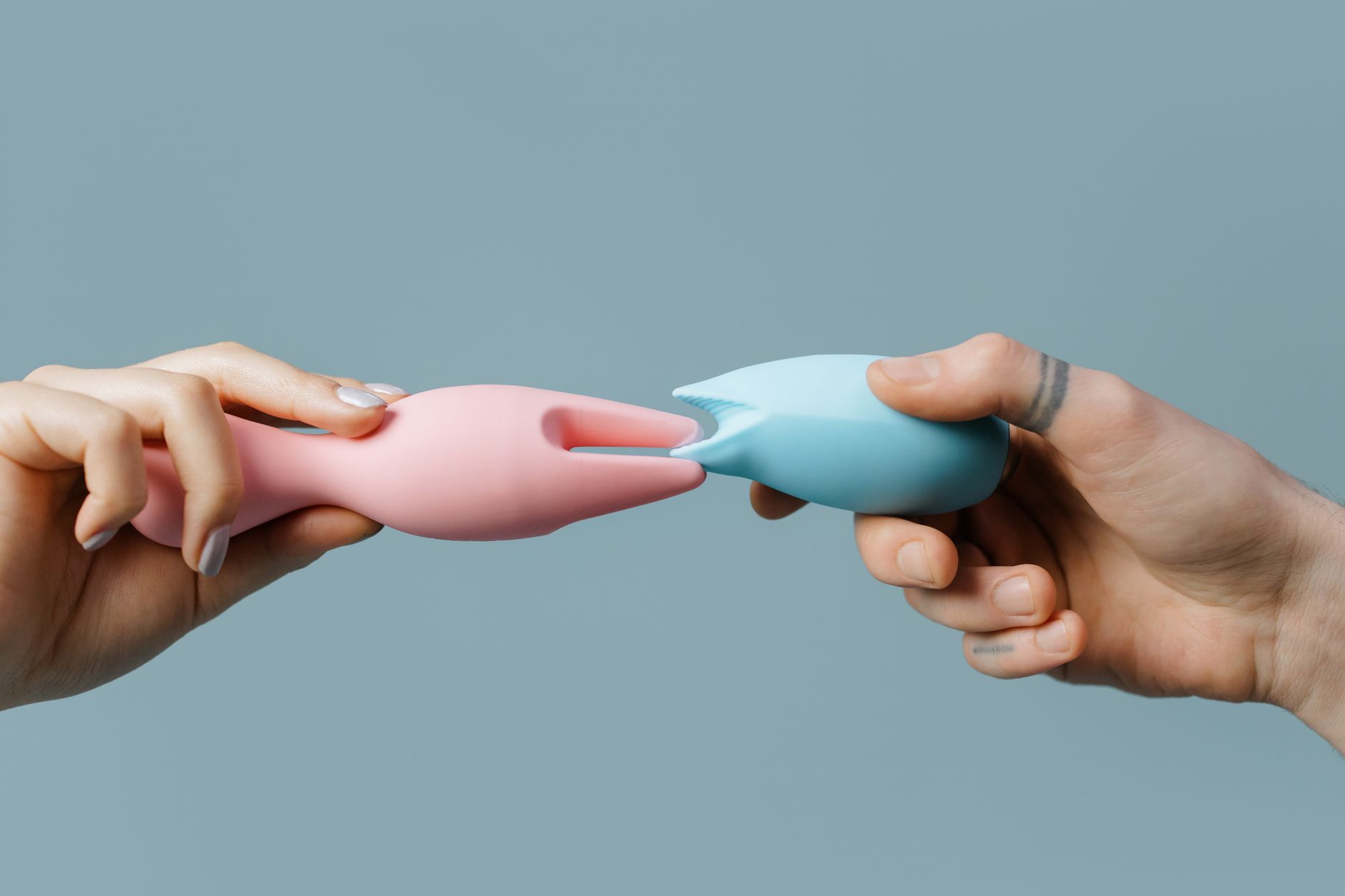
A lemon vibrator, or any clitoral vibrator, can actually interrupt that dynamic. Not by replacing your partner, but by giving you back something crucial: permission to have pleasure on your own terms.
When I work with couples where one person initiates way less, the story is almost never about desire disappearing. Usually it's some combination of these three things.
Responsive versus spontaneous desire. Some people wake up horny. Others don't get aroused until they're already being touched. Neither is better. But if you're living with someone who has responsive desire, they literally won't think about sex until the moment it starts happening. They're not withholding. They're just wired differently.
Initiation anxiety. This one surprises people. The lower-initiating partner often carries secret fear that they'll initiate and get rejected, or that they'll initiate "wrong," or that their partner will resent them for wanting it. So they do nothing instead. The higher-desire person sees silence and thinks "they don't want me." The lower-desire person feels anxious and pulls back further. It's a vicious loop.
Exhaustion that has nothing to do with you. Work stress, parenting, family obligations, health stuff, medication side effects. These pile up in the nervous system and tank libido. A partner with lower initiation isn't necessarily less attracted to you. They might just be running on fumes.
None of these things are solvable by waiting longer or trying harder to be attractive.
I ask my clients to think about this differently. When you use a lemon vibrator or any pleasure tool on your own, you're not opting out of partnered sex. You're opting in to your own arousal.
Here's what shifts:
You stop waiting for permission to feel good. That sounds simple, but it rewires something fundamental. You're no longer tethered to your partner's initiation schedule, which means their slowness doesn't feel like rejection anymore. It just feels like their pace. And because you're taking care of your own pleasure, the sex you do have together stops feeling like a negotiation.
You actually become more sexually confident. When you've spent time learning what feels good to your body—what patterns work, what rhythm builds you up—you bring that knowledge into partnered sex. You know what you like. You can ask for it. You can guide. That confidence is attractive.
Your nervous system gets more regulated. Unmet sexual desire creates a low-level stress state. Your body's still waiting for something that hasn't happened. When you give yourself that release, your nervous system settles, and paradoxically, you're often more available for your partner.
This is the part that makes people nervous. Bringing a vibrator into a dynamic where there's already tension around initiation can feel loaded.
It isn't.
Frame it this way: "I've noticed we want sex at different times, and I don't want that to create resentment. I'm thinking about using a vibrator on my own sometimes—not instead of us, but on top of us. Would that be okay?" That's it. You're not blaming them. You're not saying "you're not enough." You're saying "I'm taking responsibility for my own pleasure."
If they seem threatened, you can add: "This actually helps me feel less resentful about timing differences. And I'm hoping it means when we do have sex, I'm not coming in with all this built-up frustration." Both things are usually true.
Some partners get curious and want to be involved. Great. Some prefer you do it alone. Also fine. The key is you're not making it their job to manage your pleasure or your disappointment about timing.
Let's get tactical. The reason I recommend a lemon clitoral vibrator specifically for this situation is the suction technology—it doesn't require the same mental effort as positioning a traditional vibrator. Your brain can actually relax into it.
Schedule it, don't sneak it. If you're doing this on Tuesday evening, just say so. "I'm going to have some time for myself around 8." Your partner doesn't need details, but the transparency actually reduces the shame spiral. You're not hiding. You're just taking care of yourself.
Warm up first. Don't jump straight to the vibrator. Spend five or ten minutes however you like—reading something that gets you going, thinking about a fantasy, whatever activates your brain. The lemon works better when you're already halfway there.
Experiment with patterns. The Lem has different suction intensities. Lower isn't always "better for beginners." Find what actually makes your nervous system pay attention. That might be a strong, consistent pattern, or it might be one that varies. You're learning your own body, not following a script.
Don't always chase the orgasm. Some sessions, the point is just pleasure. The sensation. You're building a relationship with your own body, not a performance metric.
First: sex becomes less fraught. When you're not desperate for your partner to initiate, their slowness doesn't feel like a referendum on your worth. It just feels like a schedule mismatch, which it is.
Second: you'll probably ask for what you want more. You know what feels good now. You've had permission to explore. That transfers into partnered sex. Instead of lying there hoping your partner guesses, you actually direct sometimes. "Slower" or "here" or "keep doing that." Couples who can do that report way better sex.
Third: your partner might initiate more. Not always—some people are just wired with lower spontaneous desire, and that's not changeable. But many will. Because initiation anxiety often melts when the higher-desire person stops acting desperate. And because responsive-desire people sometimes feel safer initiating when they know their partner isn't running on empty emotionally.
I want to be honest though: sometimes a big initiation gap points to something that a vibrator won't fix.
If your partner has explicitly said they don't want sex with you, or if they've checked out of the relationship, that's different. If there's been infidelity or broken trust, or if one of you is depressed or dealing with trauma, solo pleasure is a helpful tool but it's not the main event. Get help from a therapist.
But if you're just two people with different desire cycles who are starting to resent each other? A lemon vibrator or any tool that helps you access your own pleasure can genuinely change the temperature in your relationship. Not because it replaces your partner. But because it gives you back something that desire mismatches always steal: your autonomy.
No. The opposite usually happens. Couples where the higher-desire partner has their own pleasure practice usually report that their partner initiates more, not less. That's because the higher-desire partner stops acting desperate, which is often what makes the lower-desire partner shut down.
No weirder than your partner having a hobby you don't share. Sexual pleasure is part of your life, with or without a partner. Meeting your own needs is actually a sign of emotional health, not a sign that something's wrong with your relationship.
Whatever feels right. Some people use one once a week. Some use one a few times a month. The point isn't frequency—it's that you have an option that doesn't depend on your partner's mood or timeline.
That depends on what feels honest to you both. I usually recommend transparency, not because you need to give details, but because secrets in relationships usually cost more than honesty. Saying "I used my vibrator last night" normalises the whole thing and removes the shame that often fuels resentment anyway.
Yes, actually. If your partner has responsive desire—meaning they don't get aroused until they're already being touched—then using a vibrator on your own teaches you what gets you going before partnered sex starts. Then when you two are together, you're not starting from cold. You already have momentum.
Listen to the upset. Often it's not about the vibrator at all—it's about fears underneath (am I enough, is she losing interest in me, what does this mean). Those are conversations worth having with a therapist or couples counsellor, not things to solve by just not using the vibrator. Most partners who get curious and understand what's actually happening become supporters of this, not opponents.
Initiation mismatches are one of the hardest things to navigate in relationships because they feel so personal. When someone doesn't initiate sex, it can feel like they don't want you. It takes real emotional work to separate those two things.
Using a lemon clitoral vibrator doesn't solve the fact that you and your partner might want sex at different frequencies. But it does something maybe more important: it puts you back in charge of your own pleasure. It removes the sting from your partner's slowness because you're not waiting for them to want you. You're taking care of you.
That shift—from waiting to acting, from desperate to autonomous—is what actually changes relationships. Not the vibrator itself. The permission you give yourself to have pleasure on your own terms.