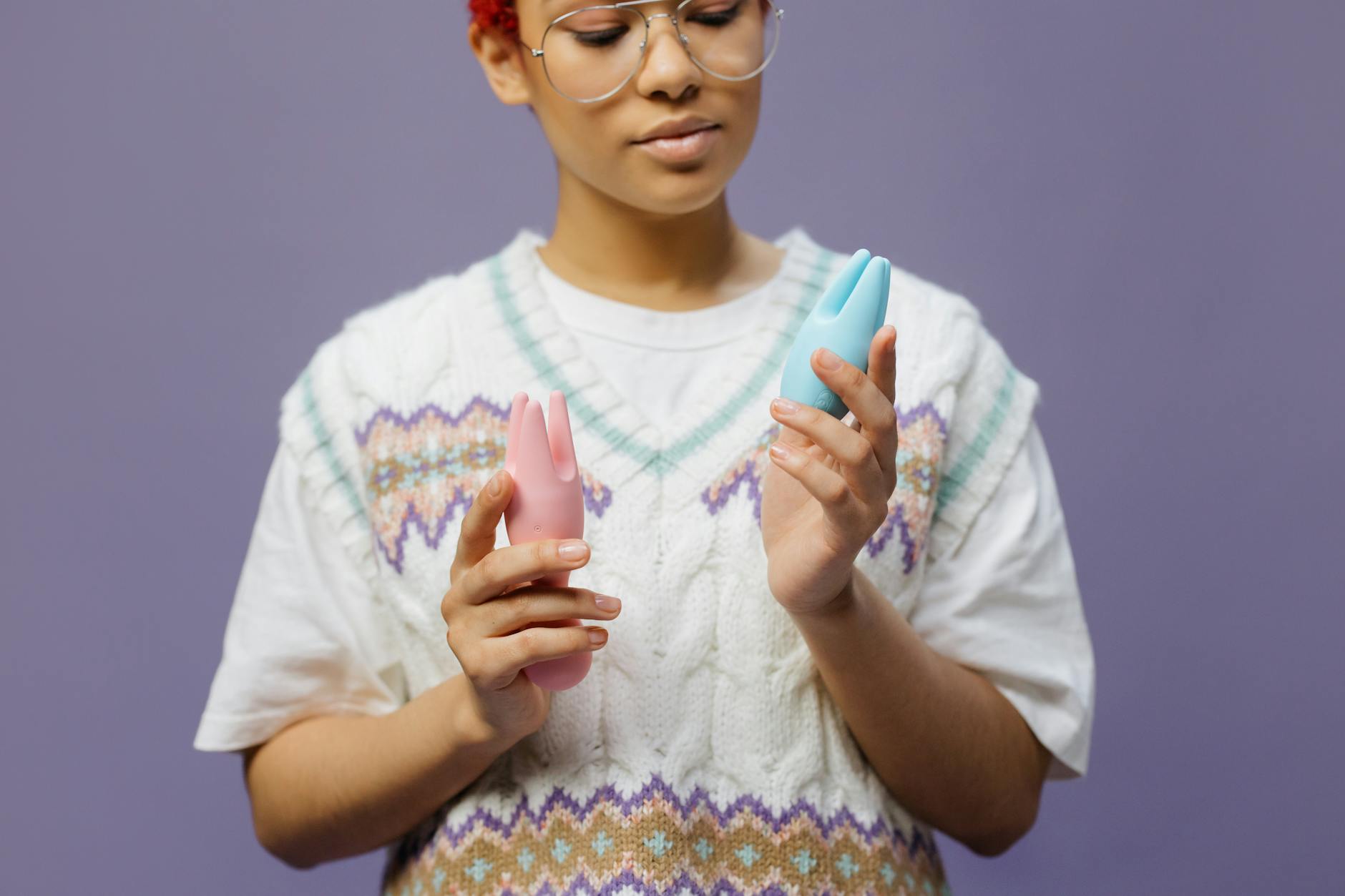
Let's talk about what hormones actually do
Hormonal fluctuations from your cycle, birth control, perimenopause, or life transitions change how your tissues respond to stimulation. Thinner tissue, slower arousal, different clitoral shape or positioning. None of this means your pleasure is broken. It means the tool you're using might not be matched to what your body needs right now.
That's why lemon vibrators work differently than traditional vibrators when sensitivity shifts. The suction mechanism doesn't rely on direct friction. It creates gentle vacuum stimulation that works with your changing anatomy instead of demanding your body adapt to it.
How hormonal changes affect sensation
When estrogen drops, tissue thickness decreases, and the clitoral complex can feel more exposed or sensitive. Direct vibration that felt great last month might feel too intense, sharp, or even uncomfortable now. The culprit isn't that you're broken. It's that friction-based stimulation assumes a particular tissue state.
Other hormonal shifts change arousal speed or depth of sensation. Some people notice orgasms feel shallower or require more mental focus. Others find sensation is still strong but arrives on a slower timeline. Birth control, antidepressants, and hormonal IUDs all write their own scripts.
A lemon clitoral vibrator sidesteps the friction problem entirely. Suction draws tissue gently into the device, creating stimulation that's diffuse across a larger surface area rather than concentrated on a single point. That matters when your tissue is thinner, more tender, or simply responding differently than it used to.
Why suction beats friction when sensitivity changes
Three mechanical reasons:
Distributed pressure. Suction engages nerves across the entire clitoral area rather than focusing intensity on one spot. If your clitoris is more sensitive or your tissue is thinner, that distributed approach feels more comfortable and sustainable.
Lower direct contact. The device creates a seal, so stimulation happens via air pressure and the gentle suction rhythm rather than the vibrator physically scraping against tissue. That eliminates the friction burn risk that comes with traditional vibrators on sensitive anatomy.
Customizable intensity without the mess. You can move through intensity levels on a lemon sucker without changing tools. When hormone shifts make you hypersensitive, you're not stuck choosing between "too much" and "nothing." You can pulse at level 1 or 2, knowing that's still effective stimulation.
Starting a lemon vibrator during hormonal sensitivity
If hormonal changes have made sensation unpredictable, here's how to approach it.
Warm up longer than you think you need. Arousal takes longer when hormones are shifting. Budget 15-20 minutes of foreplay or solo exploration before introducing the device. Your body isn't lazy. It's recalibrating.
Start at the lowest setting. On a lemon clitoral vibrator, patterns 1-3 are where most people begin during sensitive phases. They're gentle but still deliver clear stimulation. You're not compromising effectiveness. You're matching your body's current state.
Apply water-based lubricant first. Thinner tissue gets more benefit from it. Lube isn't a sign of dysfunction. It's a tool that lets tissue glide rather than tug.
Position matters more than you might think. Some people find stimulation works better if the device is angled slightly downward or off to one side rather than directly centered. This is especially true during hormonal phases when the clitoral complex has shifted position slightly. Take 30 seconds to experiment with angle. That small tweak often changes everything.
Managing intensity as your body changes throughout your cycle
If your hormonal shifts are cyclical, pay attention to the pattern. Some people tolerate much higher intensity during the follicular phase and need gentler patterns mid-cycle. Others have the reverse pattern.
When you notice the shift, don't force the intensity level you're used to. Switch down. A lemon vibrator makes this effortless. You're not buying a different tool. You're simply tapping the button.
If you're using birth control or hormone therapy, sensitivity might be consistent but just different from your baseline. In that case, recalibrate your starting point and stick with it until something changes again.
The key is giving yourself permission to adapt. Pleasure isn't static. It's responsive to your actual body, not the body you used to have.
When hormonal changes include pain or numbness
If sensation goes numb entirely or stimulation causes pain, a lemon clitoral vibrator can still help, but you might need to approach it differently. Suction can actually be excellent for numbness because it engages deeper nerve pathways that direct friction misses.
For pain, start with the gentlest setting and the shortest duration. Five minutes at level 1 is enough. If you're consistently in pain during or after use, that's a signal to check in with a doctor. It might be a temporary hormonal symptom, or it might be something that needs clinical attention.
Neither outcome means you're done with pleasure. It means you're pausing to get the information you need.
The mental shift that matters most
Here's what I see most often: people assume hormonal changes are permanent downgrading of their pleasure. They're not. They're changes. Some feel better. Some feel different. The skill is learning to meet your body where it actually is rather than where it used to be or where you think it should be.
When you're using a tool designed for suction rather than friction, that mental shift gets easier. You're not wrestling with a device that demands a particular tissue state. You're using something built to adapt to variation.
Pairing lemon vibrators with hormonal awareness
If you're tracking your cycle or hormonal patterns anyway, use that data. You already know when sensitivity tends to shift. Mark those days in your calendar and adjust your approach. Lower settings earlier in the month, higher later. Or the opposite, depending on your body.
This isn't complicated tracking. It's one sentence per week: "Day 10, sensitivity is back to normal" or "Day 3, everything feels tender." Over a few months, patterns show up. Once you see the pattern, you just adapt.
Over time, you stop thinking about it consciously. Your hand reaches for the lower pattern during tender phases automatically. You know the timing. Your body remembers.
FAQ
What if suction feels too intense when my sensitivity is high?
Start at pattern 1, not pattern 2. Many people skip level 1 entirely, assuming it won't be strong enough. During high-sensitivity phases, it's often perfect. You can always increase. You can't undo stimulation that's already happened.
Does hormonal sensitivity mean I should switch to a different type of toy entirely?
Not necessarily. A lemon clitoral vibrator's suction mechanism is actually less demanding on sensitive tissue than traditional vibrators. If you're used to friction-based toys and hormonal changes have made them uncomfortable, a lemon sucker often works better precisely because the stimulation mechanism is gentler by design.
Can birth control permanently change what feels good during sex?
Birth control can change sensation and arousal during the time you're taking it. Some people adjust within a few months. Others find a different formulation works better. If it's been longer than three months and sensation hasn't returned to something manageable, talk to your prescriber about alternatives. Your pleasure matters in the medication conversation.
How do I know if my sensitivity change is normal hormonal variation or something that needs medical attention?
Normal hormonal variation follows a pattern. It comes and goes with your cycle or your hormone intake schedule. It might feel uncomfortable, but it's not painful or accompanied by other symptoms. If sensation change is sudden, accompanied by pain, or not cycling back to baseline, get it checked out. A gynecologist trained in hormonal health can usually sort it quickly.
Is it normal for sensitivity to change dramatically in your forties?
Completely normal. Perimenopause starts years before your last period, and hormonal fluctuations during that phase are often wilder than during regular cycling. Sensitivity, arousal speed, and orgasm intensity can all shift. So can their return. This phase can last a decade. A lemon vibrator's adjustable intensity means you're not buying new tools every time your body recalibrates.
If hormones have made me less interested in sex altogether, can a lemon vibrator help?
A tool can't create desire that isn't there. But once you decide to reconnect with pleasure, a lemon vibrator removes friction from the equation. No pun intended. Less physical discomfort means less mental resistance. It's easier to explore when your body isn't sending pain signals.
What actually changes, what doesn't
Hormonal shifts change tissue state and arousal speed. They don't change your brain's capacity for pleasure or your clitoris's fundamental ability to respond to the right stimulus. A lemon clitoral vibrator is built for bodies in transition. Suction doesn't demand a specific tissue state. It adapts to the one you're actually in.
That's not a compromise. It's smart design meeting real bodies.