Let's start with what nobody talks about
Sex isn't just about bodies. It's tied up with how you see yourself, how safe you feel, who you thought you were going to be. When that identity shifts suddenly, pleasure goes quiet. Not because your body broke. Because the person who used to enjoy it feels like a stranger.
This happens after major transitions: coming out, transitioning, surviving assault, leaving a long relationship, diagnosis, loss. The common thread isn't the specific loss. It's that your sexual self got tangled up in an identity that's no longer there. Untangling it takes time, permission, and often a tool that lets you explore at your own pace, without pressure.
That's where clitoral vibrators like the Lem come in.
Why identity loss kills desire differently than other blocks
When desire drops because of stress or hormones, the problem is usually external. You manage the stressor, adjust the dose, and pleasure comes back. When desire drops because your sexual self no longer feels like "you," the block is internal. You're not just waiting for arousal. You're waiting to recognize yourself in the person who gets aroused.
Many of my clients describe it as being haunted by their own past sexuality. They remember being turned on, remember enjoying touch, but can't access the feeling now. It's like watching a movie of someone else's pleasure. The wiring still works. The permission to use it has disappeared.
This is different from shame. Shame says "I shouldn't want this." Identity loss says "I don't know who would want this anymore." The difference matters because the solution is different. You're not reprogramming desire. You're reintroducing yourself to it.
The three stages of reconnection
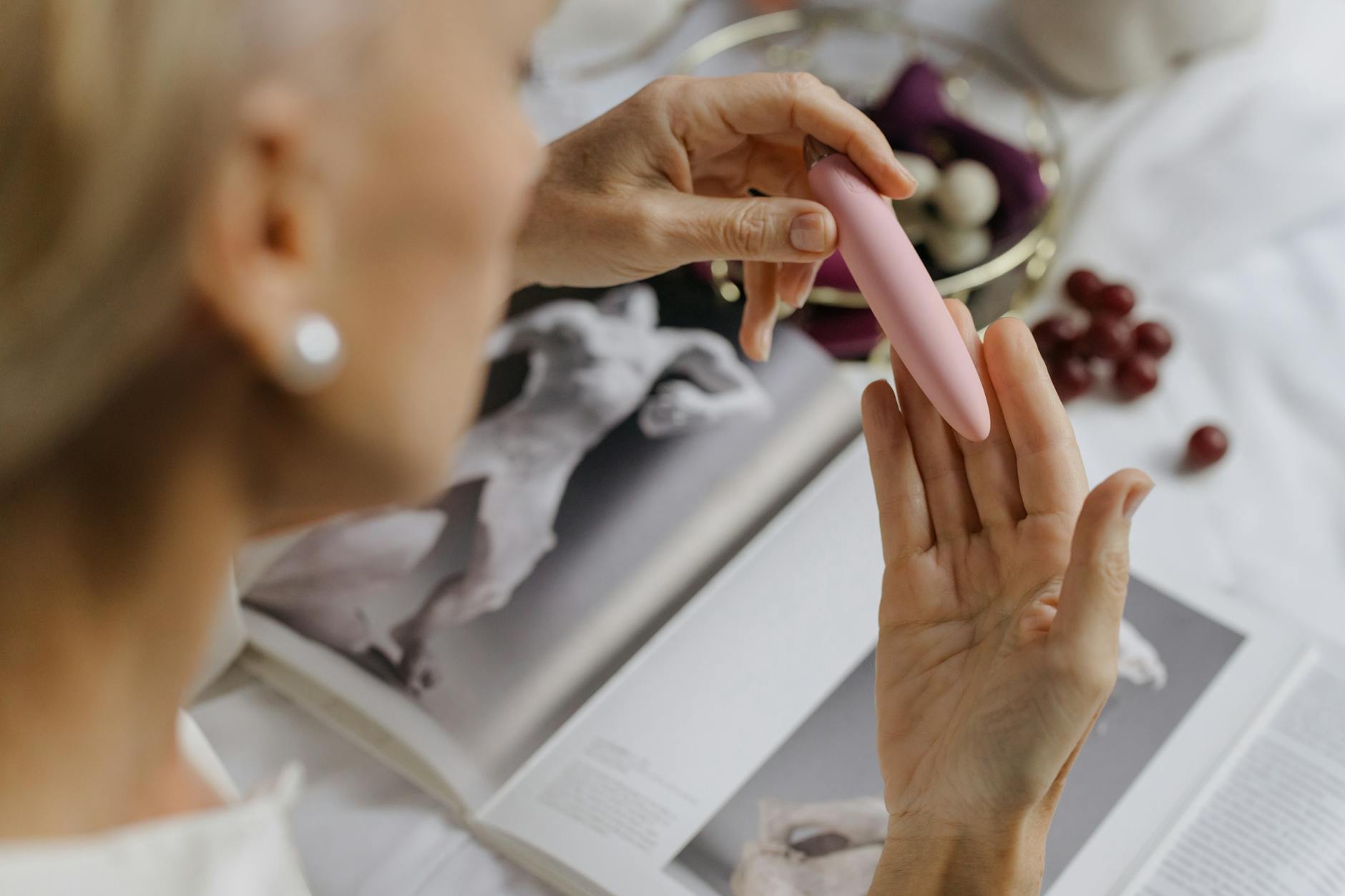
Stage One: Exploration without expectation. The goal is not to have an orgasm. The goal is to spend time with your body and notice what happens without judgment. This is where a clitoral vibrator helps tremendously. Because the Lem works through suction rather than friction, it creates a completely different sensation profile than partnered sex or other toys. It feels novel. It feels like permission to be curious without reliving the past.
Start at the lowest setting. Spend 10-15 minutes. You're not trying to reach anything. You're noticing what the stimulation feels like, where your mind goes, what surfaces.
Stage Two: Building differentiation. Once you've spent a few sessions just noticing, the next layer is creating clear daylight between old pleasure and new pleasure. This is why context matters. Use the Lem in a different space than you used to have sex. A different time of day. Different music. Wear something different. You're creating a new sexual narrative that belongs to the person you are now, not the person you were.
Many people find that this stage unlocks something: not big pleasure, yet, but presence. The ability to stay in their body instead of leaving. That's the win.
Stage Three: Integration. Once you've established that you can feel things, the next question is: do you want to? And with whom? And under what conditions? Some people find that reconnecting with their body solo is enough. Some want to eventually involve a partner. Some find that their sexuality looks completely different now, and that's a relief, not a loss. The point is that you get to decide. For the first time maybe, or for the first time in a long time, you're not performing anybody else's version of your sexuality.
Why suction-based vibrators work better here
When you're rebuilding trust with your body after identity loss, sensation that feels too intense or too familiar can re-trigger the grief. Friction-based vibrators (the kind that oscillate side-to-side) can feel like they're asking your body to go back to where it was. Suction feels different. It's gentler, more textured, less like "traditional" sex. For many people rebuilding their sexual identity, that newness is crucial. It says: this is not that. This is yours now.
The Lem starts at a very low setting. You can spend time just getting used to the sensation without expecting it to build into anything. Many people find that after 3-4 sessions of this kind of gentle exploration, the grief softens. Not because the loss is over. But because you've created space for pleasure that doesn't require you to be who you used to be.
The solo work comes first
Here's the thing I tell every person rebuilding sexual identity: do not invite a partner into this until you've spent time alone. Not because partnered sex is bad. But because when you're grieving, it's easy to slip back into performing. Doing what they want, being what they need, checking to see if you're doing it right. Solo exploration is the only way to find out what you actually want without an audience.
Give yourself 4-6 weeks of solo sessions before you consider partner play. Even if you're in a relationship. Even if your partner is supportive. The quietness of solo exploration is the whole point. You get to fail, to feel nothing, to feel weird, to feel good, to stop, to keep going. No one watching. No one judging. No one trying to help.
When to involve your partner (if you choose to)
If you're in a relationship and want to eventually share this, the conversation starts way before you bring the Lem to bed. Talk about what identity shift has felt like for you. Not as a sexy confession. As real, vulnerable information. Your partner needs to know that you're grieving, not just that you want to try a toy.
When you do bring it into partnered play, the rule is: you control it. Not your partner. You pick the settings, the timing, the speed. Your partner's job is to be present, not to drive. If this feels hard (because you've been trained to defer pleasure to a partner), start with them just watching. Then holding you. Then maybe touching you. But the toy stays in your hands. Your pleasure stays under your control.
The grief is part of it
I want to be clear: reconnecting with your sexuality after identity loss does not mean the loss goes away. It means you get to have pleasure anyway. You might be using the Lem and suddenly feel sad. That's not a sign you're doing something wrong. That's grief and arousal existing in the same moment, which is entirely possible. Let it happen. Cry and keep going, if that's what comes up. The pleasure and the grief don't cancel each other out.
Rebuilding your sexual identity is not about going back to who you were. It's about discovering who you get to be now.
When professional support helps
If you've been through significant trauma around identity or sexuality, solo toy use might bring up big stuff. Nightmares. Flashbacks. Shame spirals. This is not uncommon and it's not a sign that you should stop. It's a sign that you might need a therapist alongside this exploration. A good sex-positive therapist can help you process the grief and the pleasure simultaneously. You deserve both support and access to your own body. Those two things aren't in conflict.
Similarly, if you're questioning your sexual orientation or gender identity (and that's the loss you're grieving), connecting with community beyond your immediate circle can be grounding. Whether that's online spaces, support groups, or therapy. You don't have to figure out your new sexual identity alone.
The small win that matters
You're not aiming for dramatic multiorgasmic pleasure right now. You're aiming for: one moment where you're in your body, using a tool that feels good, and your mind is quiet. Just one. If that happens, you've won. You've proven to yourself that pleasure is still possible, even after the loss. That's the beginning. Everything else builds from there.