How to Use a Lemon Vibrator When Desire Feels Stuck After Relationship Transitions
Big life shifts kill arousal faster than almost anything else. Here's how to separate what's temporary from what's real, and why reconnecting with your own pleasure comes before reconnecting with a partner.
Relationship transitions kill desire. A move, a career shift, a restructured family dynamic, even a change in how much time you spend together. The arousal just. Stops. And then you spend weeks wondering if something broke inside you, or if your relationship is actually over, when really what happened is your nervous system is in survival mode and hasn't had bandwidth for pleasure in months.
Here's the thing: desire doesn't disappear. It goes dormant. And the good news is that dormant desire responds beautifully to intentional reconnection, especially with tools like a Lemon clitoral vibrator that let you explore sensation on your own terms, without performance pressure.
This isn't in your head. Neuroscience backs this up. When you're navigating a major life change, your brain allocates cognitive load to the transition itself. Decision-making, logistics, emotional processing, potential grief. Sex isn't a survival need (even though it feels like one), so your brain deprioritizes it. Your nervous system is literally in a different mode.
Add a partner into that picture and it gets messier. You might feel obligated to perform arousal you don't actually feel. You might worry that your lack of desire means you're less attracted to them. You might resent being touched because you haven't had space to process your own feelings yet. All of that is normal. None of it means your sexuality is broken.
The second layer is relational. Big transitions often change the rhythm of a relationship. Who's handling what. Who's stressed about what. Maybe one of you is thriving in the change and the other is struggling. Maybe you're grieving different things. That misalignment absolutely shows up in the bedroom, because the bedroom is where you're most vulnerable.
I tell almost every client this: before you try to rebuild desire with a partner, you need to rebuild it with yourself. Not because your partner is the problem (they might not be). But because you can't authentically invite someone into your pleasure if you've abandoned your own.
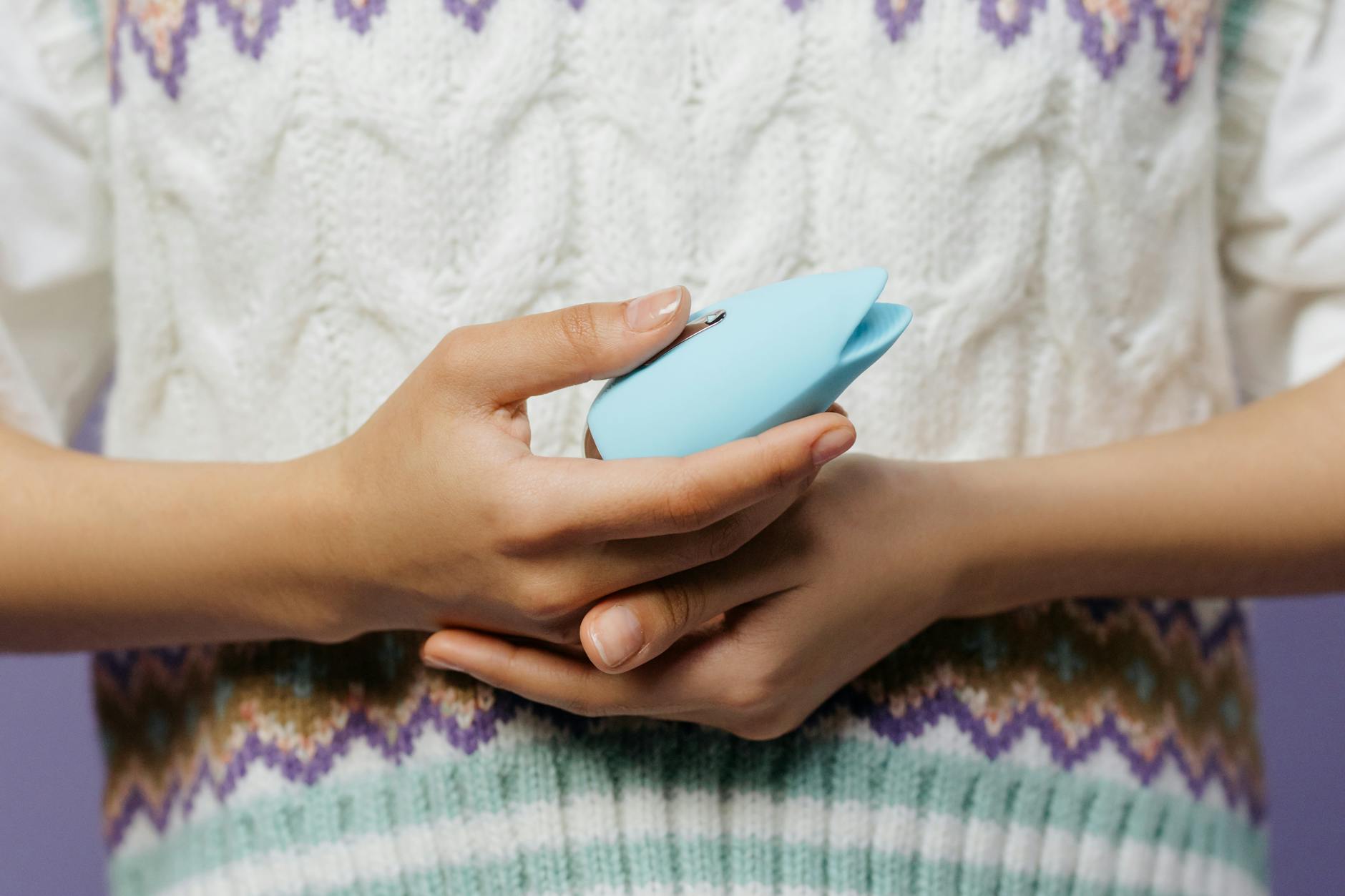
This is where the Lemon vibrator changes the conversation. Air-suction clitoral vibrators work differently than traditional vibrators. They use gentle suction and pulsing patterns that feel closer to direct stimulation. They don't require the same mental effort. Your brain doesn't have to perform arousal because the Lemon is doing the work of building sensation for you.
Start by blocking time that's truly yours. Not rushed. Not guilty. Maybe 20 minutes on a weeknight or an unhurried Sunday morning. No goal of orgasm. No performance metric. Just exploration. The Lemon has multiple intensity levels and patterns. Start at pattern 1 or 2. Notice what sensations you've been missing. Notice what feels good in your body right now, in this chapter of your life, not what felt good six months ago.
Don't expect instant arousal restoration. Desire is a skill you have to rebuild. The first week might feel flat. You might not orgasm, and that's fine. The second week your body might start remembering what pleasure feels like. By week three, you'll probably notice a shift. Your baseline arousal will tick up. You'll start thinking about sex at random moments again. That's the dormancy breaking.
Keep a private note of what you notice. Does suction feel better than vibration right now? Do you prefer slower patterns or faster ones? Do you need clitoral stimulation only, or does internal sensation matter? This information isn't just for solo play. It's the data you'll share with a partner eventually when you're ready to reconnect together.
Once you've spent time reconnecting with yourself, you can have a grounded conversation with your partner about what comes next. The key is separating arousal restoration from relationship repair. Those are two different conversations, and confusing them creates friction.
Say something like: "I've been noticing I need some time to rebuild my sense of pleasure for myself. That's not about you. I'm using the Lemon to explore what feels good right now. Once I've done that work, I'd love to figure out how we reconnect." That's honest and it's actionable.
When you do bring them in, consider starting slowly. Maybe they watch, or touch you while you use the Lemon. Maybe you use it during foreplay. The air-suction design means you can still experience direct partner touch simultaneously, so the Lemon becomes a tool in the interaction, not a replacement. Many people find that external input while using the Lemon creates a completely different sensation profile than either thing alone.
Here's something I notice with clients navigating relationship transitions: often their pleasure needs shift too. Maybe you used to need a lot of mental foreplay and now you need slow, embodied touch. Maybe you were spontaneous before and now you need time to prepare mentally. Maybe intensity matters less and presence matters more. Or the opposite.
The Lemon is useful here because it's forgiving. You can experiment with different approaches without judgment. Use it during different times of day. Use it with different lighting, music, or mental focus. You're essentially relearning your own arousal in real time, which is actually a gift. Many people never have that chance.
If you've done the two to three week reconnection work and desire still feels absent, that might signal something else worth exploring. Sometimes a relationship transition is actually a relationship breaking. Sometimes hormonal shifts coincide with major life changes. Sometimes depression or anxiety is running underneath everything. None of that is a problem to shame yourself over, but it's worth naming.
A conversation with a therapist (ideally one who specializes in sex and relationships) can help you distinguish between "my arousal is dormant" and "something bigger is asking for attention." The Lemon is a beautiful tool for pleasure exploration, but it's not a replacement for professional support if you need it.
I know that sounds like coaching-speak and I mean it as such. But transitions force you to rebuild your relationship to your own body and to your partner's. That rebuilding is the part where real change happens. You get to decide what pleasure looks like now, not just repeat what worked before.
The Lemon clitoral vibrator is particularly good for this because suction-based stimulation creates a different neurological response than traditional vibration. It engages sensation more holistically. People often report that it takes them deeper into their body, which is exactly what you need when you're trying to reconnect with desire that's gone dormant. You're not chasing the orgasm you used to have. You're discovering the one you have now.
There's no universal timeline, but I typically see two to four weeks of intentional solo exploration before arousal starts shifting noticeably. Some people notice it in days. Others need six to eight weeks. The key is consistency, not intensity. Fifteen minutes with the Lemon twice a week beats once-a-week marathon sessions. Your nervous system needs regular signaling that pleasure is safe and available.
No. Actually the opposite. When you use a clitoral vibrator like the Lemon for solo exploration, you're gathering information about your own arousal. You're building a blueprint of what feels good. That data makes partnered sex better, not worse. The most common experience is that people want more partnered connection once they've reconnected with their own pleasure.
That's worth a separate conversation from the desire-reconnection conversation. A partner's discomfort with vibrators often signals something else: anxiety about adequacy, a mismatch in how you each view sex, or unprocessed feelings about the transition itself. The Lemon isn't the real issue. It's a mirror for something deeper. If your partner is open to it, you might frame it as "I'm learning about my body right now and this tool helps me do that. I want to bring you into this process." If they're not open to it, that's information about whether you're aligned on pleasure and autonomy.
That depends on your relationship and your comfort. There's no universal right answer. Some people find that transparency builds trust. Others need privacy as a form of reclamation during a chaotic transition. The key is that it's your choice. If you decide to keep it private, own that choice without guilt. If you decide to share, do it without apology. Either path is valid.
Yes. In fact, people on medications like antidepressants often find that air-suction vibrators like the Lemon work better than traditional vibrators when sensation is muted, because the suction creates a different neurological pathway than pure vibration. Start at lower intensity levels and work up. You might also find that using the Lemon consistently actually helps your body recalibrate to sensation over time.
That's a big question and it sits outside the scope of pleasure recovery. A good therapist, ideally one trained in the Gottman Method or similar evidence-based approaches, can help you and your partner navigate whether the transition revealed incompatibility or just created temporary friction. Reconnecting with your own desire through the Lemon can happen in parallel with that deeper work. Your sexuality is yours, regardless of what happens with the relationship.
Desire doesn't vanish during transitions. It goes quiet. And quiet desire responds to gentle, consistent invitation. The Lemon clitoral vibrator creates that invitation. It lets you explore sensation without pressure, gather information about your own arousal, and then bring that knowledge into partnership when you're ready.
Start solo. Take your time. Notice what comes back. Then decide how you want to share that with your partner. The transition you're navigating might feel like it broke something. More often it's just reorganizing what was always there.
If you're working through a relationship transition and reconnecting with pleasure feels overwhelming, reach out. We can talk through what reconnection might look like for you.