When anxiety blocks pleasure, it's not a personal failure
Let's be real. Anxiety doesn't just live in your head. It lives in your body. When you're anxious, your nervous system goes into fight-or-flight mode. Blood leaves your genitals. Lubrication stops. Your clitoris pulls back. Your muscles clench. And suddenly, pleasure feels impossible.
You're not broken. Your body is doing exactly what it's supposed to do when threatened. The problem is that anxiety doesn't distinguish between a tiger and a racing mind.
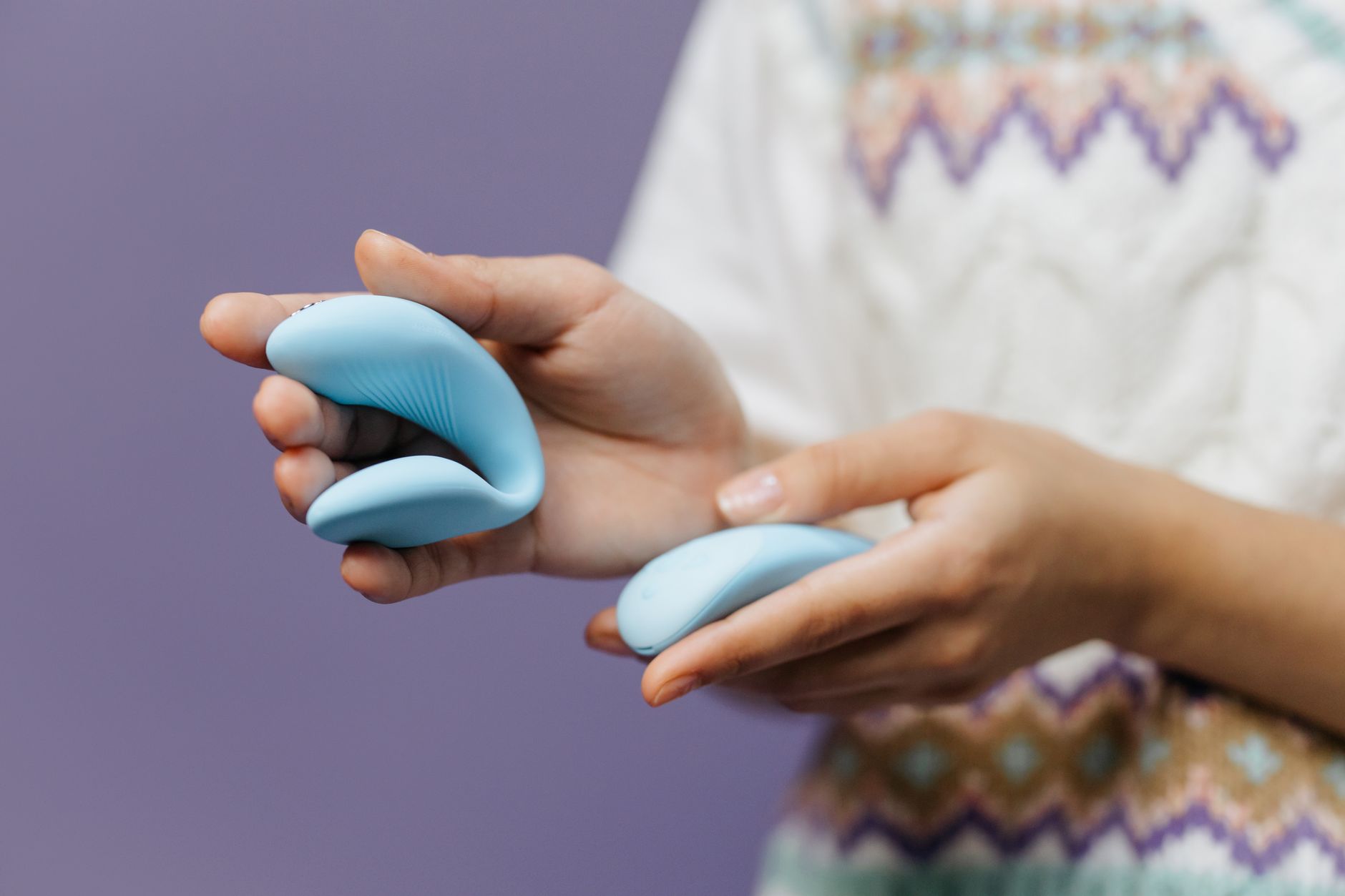
The good news: a lemon vibrator can help you interrupt this pattern. Not by forcing relaxation, but by giving your nervous system a different pathway to follow. Suction stimulation (the technology behind lemon clitoral vibrators like the Lem) works differently than traditional vibration. It can actually help you step out of the anxiety loop and back into sensation.
How anxiety and arousal are wired together
Your sympathetic nervous system (fight-or-flight) and your parasympathetic nervous system (rest-and-digest) can't run at the same time. One dominates. When you're anxious, your sympathetic nervous system has control. This means:
- Blood vessels constrict, reducing blood flow to your genitals
- Adrenaline rises, cortisol spikes, dopamine drops
- Your vagus nerve tightens instead of relaxing
- Physical sensation dulls because your brain is monitoring for threat
The moment you feel even a whisper of anxiety during sex, your body interprets it as a reason to shut down. This creates a feedback loop: anxiety blocks arousal, blocked arousal creates more anxiety, and suddenly you're watching yourself not feel anything instead of actually feeling.
Why lemon vibrators work differently when you're anxious
Traditional vibrators deliver consistent, repetitive stimulation. When you're anxious, repetition can feel monotonous or even triggering because your anxious brain wants novelty and proof that you're safe.
Lemon clitoral vibrators use suction combined with pulsation. Suction creates a rhythmic pressure wave that feels more like a gentle massage or a partner's mouth. This pattern is more novel, more engaging, and crucially, it gives your brain something specific to focus on besides your anxiety.
Why this matters: when your attention is locked onto a distinct, pleasurable sensation, the part of your brain that's running the anxiety program quiets down. You're not fighting the anxiety. You're just redirecting your attention.
Second, suction stimulation tends to feel less intense in the way that traditional vibration does. You get deeper sensation without the surface-level buzzing that can feel overwhelming when you're already on edge.
The nervous system reset: how to start
If anxiety has been blocking your pleasure, you can't just jump into using a lemon vibrator and expect it to work instantly. Your nervous system needs permission to downregulate first.
Step one: Create a non-performance container.
Don't make this about getting off. Not yet. Tell yourself you're doing a sensation exploration, not trying to achieve anything. This removes the pressure your anxious brain is already piling on. Pressure equals more sympathetic activation. Permission equals the opposite.
Step two: Start with touch, not the device.
Spend 10 minutes touching yourself in a way that feels purely exploratory. No agenda. Not trying to get aroused. Just noticing: where does my body want to be touched? What pressure feels good? What makes me relax instead of tense?
This teaches your nervous system that this time is safe. It's not an emergency. You're not trying to prove anything.
Step three: Introduce the lemon vibrator at low intensity.
When you do reach for your lemon clitoral vibrator, start at pattern one or two (the gentlest settings). The goal is not sensation yet. The goal is familiarity. Let your body get used to the feeling of suction. You might not feel much. That's normal. Your nervous system is still deciding if it's safe to let you feel.
Building arousal when anxiety keeps interrupting
Once your body is familiar with the sensation, here's where you start training your nervous system to switch from anxiety to arousal.
Expect the anxiety interruptions. They're normal.
You might feel good for 30 seconds, then suddenly your mind jumps to your to-do list or a conversation you had three days ago. Your body tenses. The sensation stops feeling good. Welcome to what anxiety does. It's not a sign you're doing it wrong.
When this happens, pause the device. Take three intentional breaths (in for four, hold for four, out for six). Then restart. You're teaching your body that interruptions are expected, manageable, and not worth panicking about.
Layer in grounding techniques.
While using your lemon vibrator, ground yourself in the present moment. Name five things you can see, four you can touch, three you can hear. This engages your prefrontal cortex (your thinking brain) in a way that competes with the anxiety loop.
Or focus entirely on sensation. Where exactly do you feel the suction? Is it a buzzing, a pulsing, a wave? Specific sensory focus is a form of meditation. It pulls your attention away from anxiety narratives.
Build in longer warm-up time.
When anxiety is present, your body needs 20-30 minutes to genuinely switch into arousal mode. Budget the time. Rushing guarantees you'll stay stuck in your head. You can't think your way into arousal. You have to settle into it.
What to do if you hit a wall
Sometimes even with the right device and the right technique, anxiety is too big. This is where you need support beyond a lemon vibrator.
If anxiety has been blocking pleasure for months, consider working with a therapist who specializes in somatic (body-based) therapy or sex therapy. Anxiety doesn't always disappear with a device. Sometimes you need to address the root cause: past trauma, current life stress, relationship conflict, or medical factors like depression or medication side effects.
A lemon clitoral vibrator is a useful tool in that process, not a replacement for it. Think of it like physical therapy for your pleasure. It can help retrain your nervous system. But if your nervous system is severely dysregulated, you may need professional support.
The role of your partner (if you have one)
If you're in a partnership, anxiety often gets tangled up with performance pressure. Your partner wants to help. You want to relax. Instead, their presence sometimes makes the anxiety worse because now you're also managing their disappointment.
If this is you, here's what helps:
- Use your lemon vibrator solo first. Build the neural pathway when there's no one else to manage.
- Once you've established that pleasure is possible, introduce your partner into the room but not into the act. They can be present while you use your device, but they're not involved. This lets you separate "sensation with a partner nearby" from "trying to perform for a partner."
- Eventually, you can move to partnered play. But the foundation has to be rebuilt in solitude first.
When medication is part of the picture
Many medications that treat anxiety also suppress libido and orgasm (SSRIs are famous for this). If you're on antidepressants or anti-anxiety medication and you're noticing that pleasure has flatlined, this might not be purely psychological.
Talk to your prescriber. Sometimes switching to a different medication helps. Sometimes adjusting the dose helps. Sometimes adding another medication to counteract the sexual side effect helps. Sometimes the right combination is worth the effort.
A lemon vibrator can still help, but it's not going to override medication-induced anorgasmia on its own. You may need both the device and a medical adjustment.
People also ask
Can anxiety permanently damage my ability to have orgasms?
No. Anxiety suppresses pleasure, but it doesn't destroy the neural pathways for orgasm. Once you address the anxiety (or learn to manage it), your capacity for pleasure returns. Many people find they have stronger orgasms after working through anxiety than they did before, because they've also learned how their body responds.
How long does it take before a lemon vibrator helps anxiety-related arousal issues?
Some people notice a shift in two to three weeks of consistent use (three to four times per week). Others take two to three months. The timeline depends on how long the anxiety has been blocking pleasure and how much nervous system support you have (therapy, meditation, medication, etc.). Patience is part of the healing.
Is it normal to feel numb when I first use a lemon vibrator if I'm anxious?
Completely normal. Numbness is a protective mechanism. When anxiety runs high, your body numbs you to protect against overwhelm. This typically decreases as your nervous system learns that the experience is safe. Don't interpret numbness as failure. It's your body's way of pacing itself.
Can I use a lemon vibrator if I'm on antidepressants?
Yes. Antidepressants don't make vibrators unsafe. However, some antidepressants (particularly SSRIs) can suppress orgasm or sensation. A lemon clitoral vibrator might help you access sensation and pleasure even with medication side effects, but you may also need to talk to your prescriber about adjusting your medication. The two approaches work together.
Should I tell my partner I'm using a lemon vibrator to manage anxiety-related arousal issues?
It depends on your relationship. If you're in a committed partnership and you want to work toward partnered pleasure, transparency helps. Frame it as: "I'm rebuilding my arousal with some solo time. I'm not excluding you. I'm preparing so that when we're together, I can be more present." Most partners respond well to this when it's framed as self-care, not replacement.
What if the lemon vibrator helps my anxiety temporarily, but the anxiety comes back?
An external tool can interrupt the anxiety loop in the moment, but it won't rewire your entire nervous system on its own. If anxiety keeps returning, you may need ongoing support: therapy, meditation practice, exercise, stress management, or medication. A lemon vibrator is a powerful tool, but it works best as part of a broader approach to nervous system health.
The real work: reconnecting with your body
Here's what I know from years of working with couples: anxiety around pleasure isn't about shame or broken sexuality. It's about a nervous system that's protecting you from something real or imagined. The lemon vibrator isn't magic. It's a tool that helps your body remember that pleasure is safe.
The real work happens in your mind. You have to decide, over and over, that you deserve pleasure. That your arousal matters. That feeling good isn't selfish or irresponsible. That your body isn't dangerous.
A lemon clitoral vibrator can help you practice this. Every time you use it, you're sending your nervous system a quiet message: "This is safe. Sensation is allowed. You can relax."
Over time, that message compounds. Your body starts to believe it. Arousal becomes possible again. And pleasure, which felt impossible during the height of anxiety, feels like the most natural thing in the world.
If anxiety has been blocking your pleasure, you're not broken. You're just stuck in a loop your nervous system created to protect you. And loops can be interrupted. Let me know if you need support finding the right next step for you.