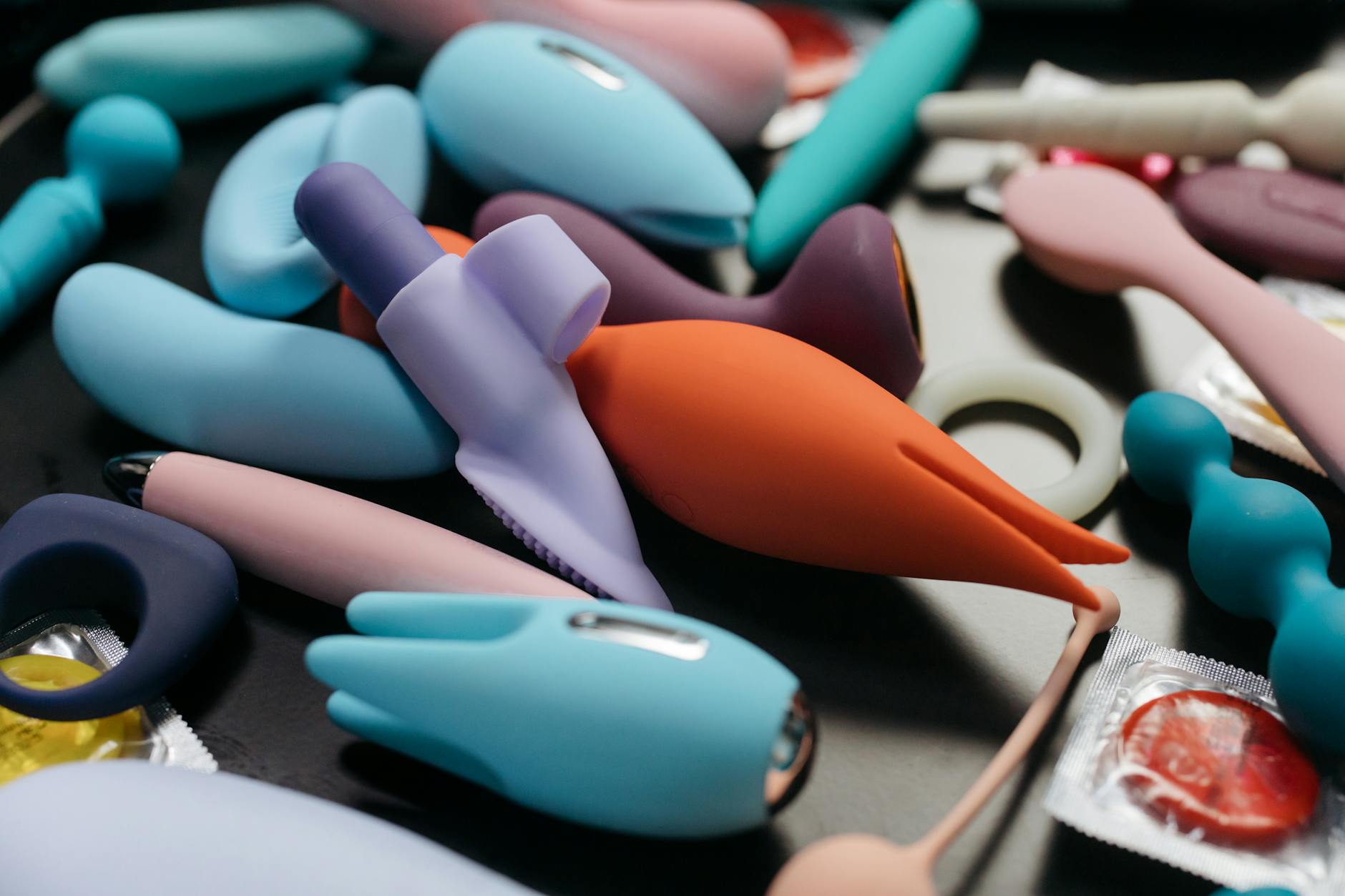
Here's the thing nobody talks about: your pleasure literally changes with your cycle
Your brain chemistry, hormone levels, blood flow, and sensitivity all shift across your menstrual cycle. This isn't subtle. During ovulation, your estrogen peaks, your clitoris becomes more engorged, your skin is more sensitive to touch, and your orgasms tend to be more intense and easier to achieve. Then everything shifts again a week later.
Most people treat their pleasure as static. They grab the same toy, use the same settings, expect the same result. But if you time your lemon vibrator use with your cycle, you're basically hacking your own biology for better sensation and faster orgasms.
Let me walk you through what actually happens, when to use your lem vibrator, and how to adjust your approach across the month.
What happens to your body during the follicular and ovulation phases
Your cycle has two main halves. Days 1-14 (roughly, depends on your cycle length) are your follicular phase. Estrogen climbs steadily. Your clitoris gets more blood flow. Nerve endings become more responsive. By day 12-16, you hit ovulation: peak estrogen, peak sensitivity, peak arousal potential.
During this window, the clitoral tissue literally swells. The glans becomes more prominent and more sensitive. Vaginal lubrication increases. Your brain's reward centres light up more easily. Orgasms come faster and feel more intense.
This isn't a small effect. Research shows orgasm frequency during ovulation is roughly double what it is during the luteal phase (after ovulation). Orgasms also tend to have more muscular contractions.
Here's what matters for your lemon vibrator use: this heightened sensitivity means you can feel texture, pattern variation, and intensity differences more acutely. You might find yourself preferring lower settings mid-cycle because sensation is already amplified by your body.
The luteal phase: why your lemon suction vibrator might feel too intense
After ovulation, progesterone rises and estrogen drops. This lasts about 14 days. During this phase, clitoral engorgement decreases. Sensitivity actually goes down. Your skin becomes less responsive. Orgasms take longer to build. Everything feels muted compared to ovulation week.
This is also the phase when many people report that regular vibrators feel too intense, or that they can't orgasm easily, or that sensation feels numb. It's not you. It's textbook cycle physiology.
For people using a lemon clitoral vibrator during the luteal phase, the suction mechanism actually becomes more valuable. Because direct friction vibration might feel too much or too little depending on your luteal subphase, suction provides a different type of stimulation that can feel more accessible during this time.
When to schedule your lemon vibrator sessions for maximum pleasure
If you're tracking your cycle (even loosely, via an app or just noting when your period starts), here's the framework:
Menstrual phase (days 1-5). Pleasure sensitivity is low but not zero. If you use your lemon vibrator here, expect to need more time and higher intensity. Your body is shedding the uterine lining, so lower-key sensation often feels better than strong stimulation. This is a good phase for gentle exploration rather than goal-oriented orgasm chasing.
Follicular phase (days 5-14, peak at days 12-16). This is your sweet spot. Estrogen is climbing toward its peak. Your clitoris is engorging. If you use your lem vibrator during ovulation week, you'll likely find that lower settings feel amazing, orgasms come faster, and sensation feels richer. This is the phase to experiment with patterns you like, because you'll be more sensitive to texture variation.
Early luteal (days 14-21, first week after ovulation). You're still relatively sensitive, but declining. If you had great sessions during ovulation, don't be surprised if you need slightly higher settings here. Pleasure is still accessible but requires a bit more intention.
Late luteal (days 21-28). Progesterone is at its peak. Pleasure sensitivity is at its lowest. This is the phase when many people report numbness or difficulty orgasming. If you use your lemon clitoral vibrator here, give yourself more warm-up time, consider higher settings, and don't judge yourself if orgasm takes longer or feels less intense. Your body isn't broken. Your hormones are just different.
How to adjust your lemon vibrator settings based on cycle timing
Let's get practical. Here's what actually changes:
Warm-up time. During ovulation, 5-10 minutes might be enough. During late luteal, budget 20-25 minutes. Your body needs more time to reach peak arousal when progesterone is high.
Intensity settings. If your lemon suction vibrator has multiple intensities, use lower settings during peak ovulation (settings 1-3). You'll feel everything. Switch to medium or higher settings (3-4) during the luteal phase, especially late luteal, when sensitivity drops.
Pattern variation. The follicular and ovulation phases are great times to explore different patterns if your lem vibrator has them. Your heightened sensitivity means you can actually feel the difference. During luteal phases, stick with what you know works, because experimentation when sensitivity is lower can feel frustrating.
Lubrication. You naturally produce more lubrication during ovulation. Suction stimulation works beautifully with this. During the luteal phase, when natural lubrication decreases, a water-based lube helps the suction sensation feel smoother.
Cycle tracking: how detailed do you actually need to be?
You don't need an obsessive system. Most people benefit from simply noting:
When your period starts. Mark day 1 in your phone calendar or a period app. That's your anchor point. Add 14 days and that's roughly ovulation. The 3-4 days before and after ovulation are your peak pleasure window.
How you feel during specific weeks. After tracking for 2-3 months, you'll notice a pattern. "I always need more lube the third week" or "Orgasms feel impossible during the last week" becomes predictable data you can actually use.
When you notice pleasure changes. If you suddenly feel less sensation or take longer to orgasm, check where you are in your cycle. Knowing it's predictable and temporary is itself powerful.
Most cycle-tracking apps (Flo, Clue, Natural Cycles) will show you your ovulation window automatically. You don't have to become a fertility scientist to use this information.
Why this matters for partnered pleasure too
If you have a partner, knowing your cycle gives you a language for why your pleasure preferences shift. "I'm ovulating this week and lower settings feel incredible" is wildly different from "I'm not interested" or "Something's wrong with me."
This knowledge also helps you and a partner time check-ins and experimentation. If you want to explore lemon vibrators with your partner for deeper connection, knowing you're in your high-pleasure window means you're both more likely to have a genuinely positive first experience.
Common cycle-based pleasure questions
Does cycle timing work if I'm on hormonal birth control?
Hormonal birth control flattens your natural cycle. You still technically cycle through the pill pack, but the hormone swings are much smaller. If you're on continuous hormonal contraception (like the implant or IUD), you might have almost no cycle. That means cycle-based pleasure timing won't show the same dramatic shifts. But many people still report slight variations mid-pack. Worth tracking for yourself.
What if I have an irregular cycle?
Irregular cycles make prediction harder but not impossible. Track for 3 months and look for patterns. You might ovulate at different times, but ovulation almost always has the peak-sensitivity window attached to it. Once you spot when you ovulate (sometimes a slight rise in basal body temp, sometimes just "I'm wildly horny"), use that as your marker.
Can I use my lemon clitoral vibrator during my period?
Absolutely. Many people report that pleasure and orgasm actually help with period symptoms like cramps. Orgasm increases blood flow and releases endorphins. A lemon vibrator is safe to use during menstruation. Use the same hygiene practices you would with any toy: rinse before and after, maybe use a barrier like a menstrual disc if you prefer. That's it.
The bottom line: your pleasure has a rhythm
Using a lemon suction vibrator or any clitoral vibrator without knowing where you are in your cycle is like trying to cook without knowing what temperature your oven is. You can still make something happen, but it's probably not optimized.
Once you time your lemon vibrator use with your cycle, you're not just using a toy. You're working with your body's actual physiology. Orgasms become easier. Sensation feels richer. The whole experience feels less like friction and more like genuine pleasure.
Start tracking this week. Note when your period starts. Grab your lem vibrator during ovulation week and notice what actually changes. Then come back to this in your late luteal phase and do the same thing. You'll feel the difference immediately.
People also ask
Why do I get more horny during ovulation?
Evolution. During ovulation, your body is at peak fertility. Increased desire increases the likelihood of sex, which increases the likelihood of pregnancy. Your brain and body sync up to make sex feel more rewarding and more urgent. The dopamine hit from orgasm is higher. Estrogen and testosterone both peak, and both drive arousal. This isn't in your head. It's neurobiology.
Does cycle timing work with all vibrators or just lemon clitoral vibrators?
Cycle timing applies to any pleasure device, from traditional vibrators to suction toys to fingers to anything else. Your body's cycle doesn't discriminate. The difference is that lemon vibrators and suction-based toys often feel particularly good during ovulation when your clitoris is engorged, because suction works with engorgement rather than against it. But the cycle timing itself is universal.
What if tracking my cycle stresses me out?
Then don't do it formally. Notice patterns without data. "I always feel more pleasure the second week after my period" is the same information as a spreadsheet. If rigid tracking makes pleasure feel like work, skip the system. The insight still stands: your pleasure shifts with your cycle.
Can men use cycle timing for their partners?
Partners of any gender can. If your partner menstruates, you can learn their rough ovulation window and use that as a marker for when they might be most interested in exploring or when they might prefer lower-intensity sensation. This helps deepen intimacy because you're meeting them where they actually are rather than expecting static desire.
What's the best way to talk to a partner about cycle-based pleasure timing?
Treat it like functional information, not romance. "I noticed my body feels different mid-cycle" is far more compelling than "science says I'm hornier now." If you're using a Hello Nancy lem vibrator or similar tool, mentioning that lower settings feel better during ovulation and higher settings during luteal phase is just practical equipment talk. Low pressure, high information.
If I don't menstruate, does any of this apply?
If you don't menstruate due to hormonal contraception, age, or other reasons, cycle timing doesn't apply. But you might still experience subtle hormonal shifts or simply enjoy exploring your pleasure independently of timing. A lemon clitoral vibrator works beautifully regardless of cycle status.