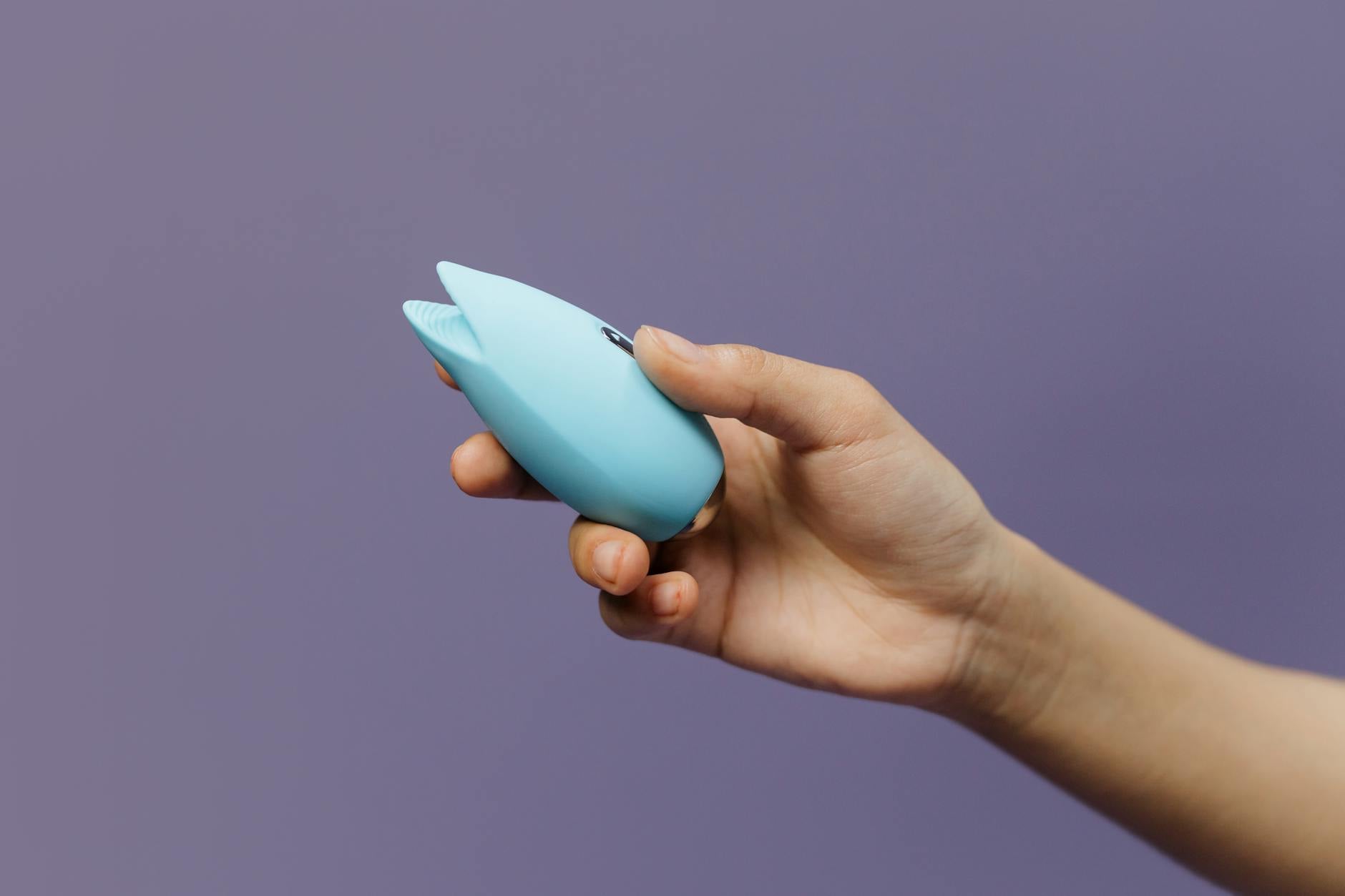
Let's start with the awkward part
You and your partner know you need to talk about sex. You really do. But every time you bring it up, someone makes a joke, someone changes the subject, or you both just sit there in that particular silence that means "I have no idea how to say this." So you don't. And then sex becomes this thing you do on autopilot or avoid entirely because talking feels impossible.
Here's what I've seen in my practice: sometimes the conversation doesn't start with words. Sometimes it starts with touch.
Why communication stalls in the first place
People avoid talking about pleasure for predictable reasons. Shame. Fear of sounding needy. Worry that you'll hurt your partner's feelings. The assumption that if they cared, they'd already know what you want. Maybe you tried once and felt judged. Maybe your partner seemed defensive. Maybe you grew up in a household where sex wasn't discussed as a normal, negotiable thing. All of that is real and all of it makes direct conversation feel unsafe.
But here's what's wild: the lack of conversation doesn't protect the intimacy. It erodes it. Couples who can't talk about pleasure don't have better sex. They have resentment, missed opportunities, and a lot of assumptions that are usually wrong.
How a lemon clitoral vibrator becomes a conversation tool
This is where the Lem comes in. A lemon vibrator isn't a replacement for talking. It's a bridge to it. When you introduce the Lem into shared pleasure, you're doing something that words can't quite accomplish: you're showing, not telling.
Your partner sees what makes you respond. They watch your body tell the truth that your mouth can't form into words. They feel like they're being invited into your experience instead of being criticized for missing something. And then, almost accidentally, conversation becomes possible.
The practical setup for using the Lem together when communication is fragile
If you've never used a clitoral vibrator with your partner before, diving straight into the Lem while trying to have a bigger conversation is too much at once. Here's how to sequence it so it actually works.
First approach: solo demonstration. Tell your partner you want to show them something that's been helping you feel better. This removes the pressure of it being "about" them or a reflection on them. You're not saying "you're not doing this right." You're saying "this is new for me and I want you to see it." Alone time with the Lem, in the same room, with your partner watching. Let them see what rhythm makes you respond. Let them see where you focus the suction. This is data they need.
Second approach: shared touch. After a few rounds of solo demonstration, invite them to hold the Lem while you guide their hand. This is collaborative without being high-stakes. They're learning the rhythm. You're learning how to say "a bit higher" or "slower" or "yes, exactly there." These micro-negotiations are practice for the bigger conversation.
Third approach: introduce it during partnered sex. Maybe the Lem comes out during foreplay. Maybe it's the main event. The key is: no shame, no spectacle. Just "I want to try this together." The embodied experience often creates the opening for verbal conversation that wouldn't exist in a separate "we need to talk" meeting.
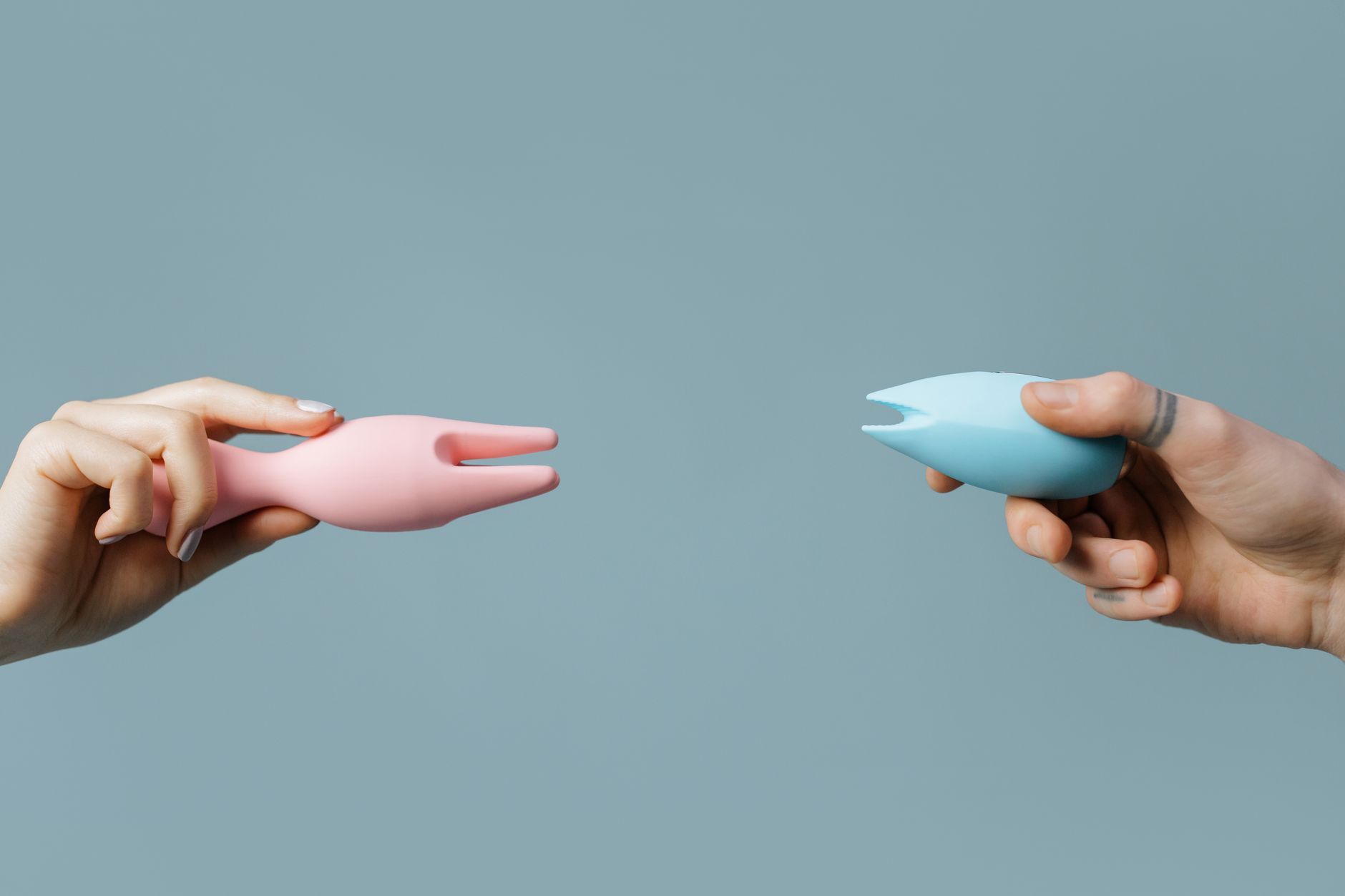
Photo by cottonbro studio on Pexels
What the Lem reveals about your pleasure patterns
When your partner watches you use the Lem, they learn things that would take 20 minutes of awkward talking to explain. They see that you need a longer warm-up than they assumed. They see that lighter suction works better than direct pressure. They notice that you respond fastest when they're not watching intently, which gives them permission to relax too. They discover that you can have pleasure that's totally unrelated to what they're doing, which is actually freeing for both of you.
This is huge because most couples operate on the assumption that pleasure is something one person gives the other. That's not quite right. Pleasure is something you generate internally. Your partner can create conditions for it, sure. But the Lem is yours. It's your nervous system talking. When they understand that distinction, a lot of the pressure evaporates.
Moving from demonstration to actual conversation
After you've used the Lem together a few times, you've got something concrete to reference. You're not saying "I feel like you don't care about my pleasure." You're saying "When I use the Lem on setting two before we have sex, I'm in a totally different headspace. Can we build that into our routine?" Specific. Actionable. Not accusatory.
Your partner might say "I had no idea that made a difference" or "I feel insecure when you use toys" or "I want to understand this better." Any of those responses is valuable because it's honest. And honest is where real intimacy lives.
The conversation after the experience
Don't expect the big talk to happen during or immediately after using the Lem together. Sometimes it happens the next morning. Sometimes a few days later, after your partner has processed what they saw and felt.
When they're ready, they might ask: How long have you wanted to try this? Does this mean something's wrong with our sex life? Can I use something too? These aren't rejections. They're the beginning of the conversation you couldn't have before. And every time you answer one of those questions, you're building a framework for talking about pleasure that actually works for both of you.
If your partner seems resistant or uncomfortable, resist the urge to push. Instead: "I know this feels new. It's new for me too. I'm not asking you to feel any particular way about it. I just want us to be able to talk about what feels good." That's the real goal. Not the Lem. Not the orgasms. The ability to say what you need and have your partner believe it matters.
When communication unlocks other things
Here's what I've observed over and over. Once couples can talk about pleasure, they can talk about almost everything else. The fear that was keeping them silent about sex extends to money, family, time, attention, and emotional needs. When you prove to each other that you can discuss something vulnerable without shame or judgment, the whole relationship shifts.
The Lem isn't magic. But it is a tool. It's a thing you can point at and say "this is what I want." It's much easier than saying "I want to feel like you desire me" or "I need you to pay attention to my body the way I pay attention to yours." Those are bigger, scarier claims. The Lem gives you somewhere to start.
Questions you might ask your partner after trying the Lem together
"What surprised you most about watching me use it?" This opens the door without sounding like a test.
"Did you feel like you learned something new about my body?" Invite them into the learning, not the judgment.
"Do you want to try something together, or would you rather keep exploring separately for now?" Give them agency. There's no right answer.
"How do you feel about bringing the Lem into our sex life regularly?" Make it concrete. Not "do you like toys" but "do you like this one, with me, in this way."
Each answer is data. Each answer helps you understand what your partner is ready for and what they need to feel safe.
FAQ: Communication, toys, and couples
Why do couples avoid talking about sex even when they love each other?
Because sex feels personal in a way that other topics don't. Critique of your sex life feels like critique of your body, your worth, your desirability. Most people grow up with the message that good sex should happen naturally, without negotiation. So negotiating feels like something's wrong. It's not. It's actually the sign that something's going right.
Can using a lemon clitoral vibrator actually improve a stalled conversation?
Not on its own, but it creates the conditions for one. When your partner watches you use the Lem and sees your authentic response, they have information that makes conversation easier. They also feel less defensive because you're not criticizing them. You're showing them something about yourself.
What if my partner thinks toys mean I'm unsatisfied with them?
This is the most common fear. Address it directly: "The Lem isn't about you. It's about my body and what helps me feel good. Just like you might use a shower or a massage or a run. It's not a replacement for you. It's something that makes me feel better so I can bring more of myself to our sex life." If they're still stuck on it after a few conversations, couples therapy can help untangle that particular insecurity.
Is it okay to use the Lem during partnered sex if we haven't talked about it first?
Communication-wise, no. You want to mention it beforehand so your partner isn't surprised. Practically speaking, you might say something like "I want to try using this during sex. Is that okay with you?" That's it. Not a whole negotiation, just a heads-up.
What if I want to use the Lem but my partner has never wanted to talk about pleasure at all?
Start solo. Build your own relationship with what feels good using a lemon vibrator. Then, when you're ready, mention it casually. Not as a problem to solve, but as a thing you're exploring for yourself. Sometimes watching your partner prioritize their own pleasure is the thing that makes communication possible.
Can couples therapy help if we can't talk about sex even with toys?
Absolutely. A good couples therapist can create a safe space for those conversations in a way that individual attempts sometimes can't. It's not weakness. It's tools. And if talking about sex is genuinely stuck, you likely need some support.
The real payoff
You don't get a Lem vibrator because you need better orgasms, though that might happen too. You get one because you deserve to feel good. And when your partner watches you prioritize that, when they see you using the Lem unapologetically, something shifts in how they see you and how they see sex. Suddenly it's not a performance you're both judging. It's a conversation you're both in.
If you're stuck in the communication gap, try this: bring the Lem in not as a fix, but as a beginning. Show your partner what you need. Let them see it. Then let the conversation follow. It usually does.
Ready to explore? Your journey toward better communication starts with yourself. Check out the full range of lemon clitoral vibrators and sexual toys to find what works for you.
Resources & Further Reading
If you want support navigating couples communication around pleasure, these approaches have solid research behind them:
- The Gottman Method (relationships institute focused on conflict resolution and emotional intimacy)
- Esther Perel's work on erotic intelligence in long-term relationships
- Emily Nagoski's writing on responsive vs. spontaneous desire (explains why couples often have mismatched expectations)
- Laurie Watson's podcast "Foreplay" (addresses exactly this kind of stalled communication in real couples)