How to Use a Lemon Vibrator When Your Partner Wants It but You Don't
The real conversation hiding underneath
Here's the thing. When a partner suggests introducing a lemon vibrator or any new toy into the bedroom and you feel resistance, it's rarely about the toy itself. Your pushback usually isn't about the lemon clitoral vibrator sitting in the cart. It's about what that suggestion feels like it means.
Does it mean they're not satisfied? That you're not enough? That you've failed to keep things interesting? Those are the stories we tell ourselves, and they're almost always wrong. But they're also almost always the actual barrier to trying something new.
Why "your partner wants it but you don't" feels different
There's a weird dynamic baked into this scenario that makes it harder than just deciding for yourself.
When you're choosing a lemon vibrator solo, you own the whole experience. You set the pace, decide how long you use it, and no one's waiting on you to be into it. But when a partner introduces the idea, suddenly there's an implied pressure. They want this. They've probably been thinking about it. And now if you say no or if you agree but seem reluctant, they feel rejected.
This is where most couples get stuck. The sex doesn't fail. The conversation fails first.
The three flavors of resistance (and what they actually mean)
I work with a lot of couples on this, and the hesitation almost always falls into one of three buckets.
"I worry it means they want me to feel different." You wonder if they're hinting that your body or the sensations you naturally create aren't enough. When a partner wants to bring in a lemon suction toy, the silent question is often: "Are they bored with me?" The answer is almost never yes. Usually they're curious about pleasure itself. But that distinction needs to be named out loud, not just assumed.
"I'm worried I'll feel awkward or it won't work." This is performance anxiety dressed up as reluctance. You're not against the toy. You're worried you'll try it, it will feel weird, and then there's this lingering shame about it not working. That's real and valid. And it's also fixable by lowering the stakes considerably.
"I liked things the way they were." Some people genuinely prefer penetrative sex, oral, or manual stimulation to anything involving toys. That's not broken. That's just a preference. And preferences matter, even if your partner has a different one.
How to actually talk about this (not just agree to it)
Most couples skip this step and move straight to trying the toy, which is why it feels awkward.
Start here: "I noticed you mentioned a lemon vibrator. I want to understand what you're excited about." Notice you're not saying yes yet. You're not saying no. You're getting curious instead of defensive.
Listen to what they say. Are they interested in adding sensation to partnered sex? Do they want to explore their own pleasure solo and want you present? Are they genuinely bored and reaching for a fix, or are they just playful and excited about something new?
Then tell them the truth: "I feel some hesitation. Here's why." Pick one of the three buckets above if it fits, or name your own reason. "I worry you're not satisfied with me" is a conversation starter. "I'm nervous it'll feel uncomfortable" is honest. "I actually prefer us without toys" deserves to be heard.
Here's what you're doing: you're separating the toy suggestion from the relationship health question. Because they're not the same thing.
If you want to try but you're scared
This is the most common scenario in my practice. Your partner wants it, you're willing, but the fear is real.
Start with the lowest possible pressure. That probably means not trying it during partnered sex yet. Use a lemon vibrator solo first. You get to know the sensation without an audience. You get to decide how long you spend with it. You learn what patterns feel good without anyone waiting for you to be aroused or responsive.
Most of my clients report that solo exploration changes everything. Suddenly it's not "trying something my partner wants." It's "trying something I discovered I actually like." That's a completely different energy.
Then, when you bring it into partnered sex, you already know what to expect. You can guide them. You can say "pattern 2 feels better" or "a little slower." You're not fumbling in the dark.
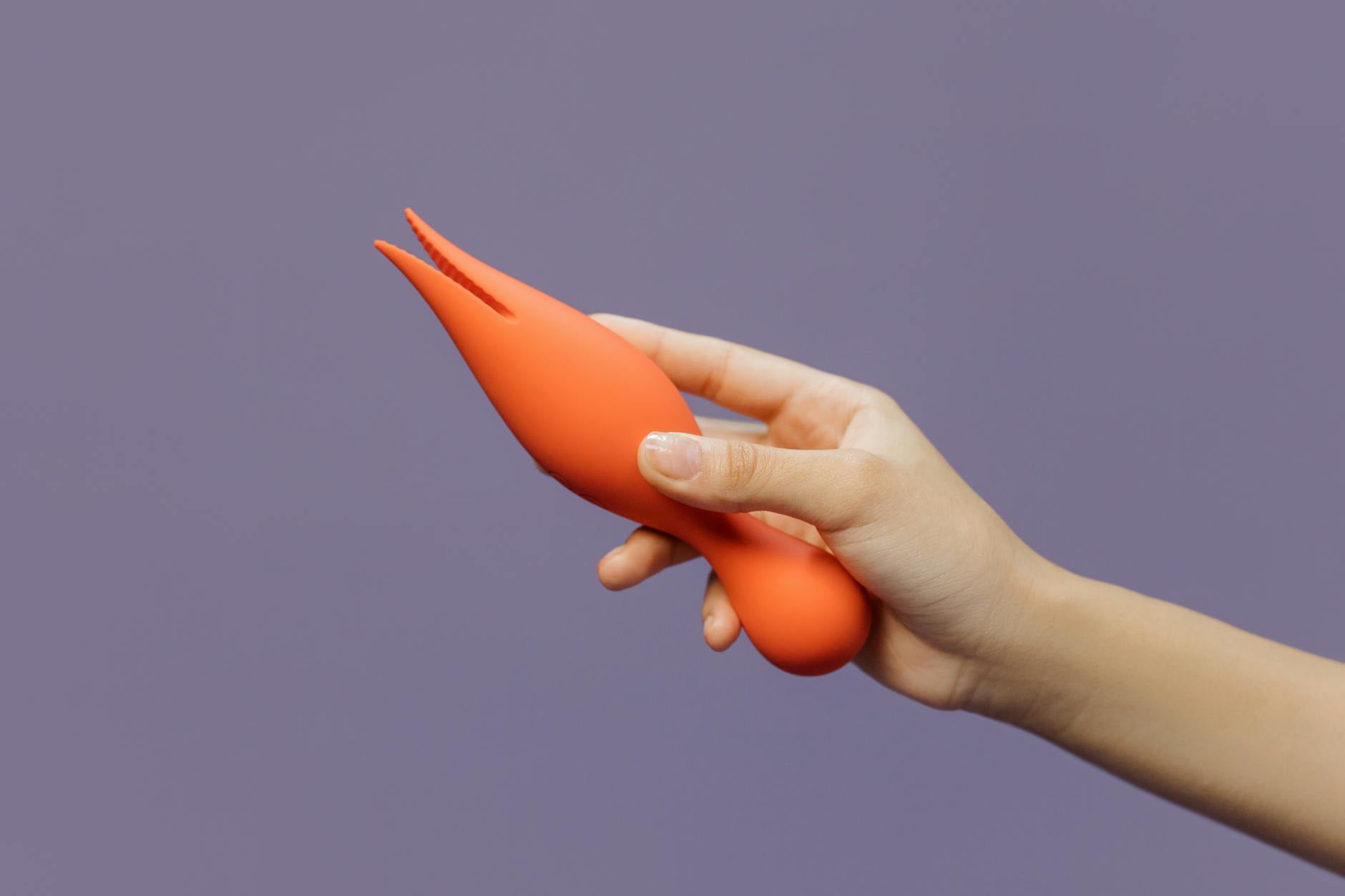
With a lemon clitoral vibrator specifically, the sensation is quite different from a traditional vibrator. It's suction-based rather than buzzing. Some people find this feels less intense, which can actually lower the pressure. You're not dealing with direct vibration on sensitive tissue. You're exploring a different kind of stimulation altogether.
If you genuinely don't want to
This matters too. Some people try toys and they just don't like them. Some people prefer the simplicity of touch and bodies and nothing else.
Your preference is valid even if your partner has a different one. The question then is whether you're willing to be a cheerleader while they explore solo, or whether you need this to be something you do together for your own sense of connection.
That's a real conversation. "I'm not into toys, but I want you to enjoy yourself" is different from "I'm not comfortable with this happening in our bedroom at all." One is about boundaries. One is about insecurity. It's worth knowing which one you're dealing with.
What often shifts once you actually try it
A lemon vibrator in partnered sex often changes the dynamic in ways people don't expect. Because it's something you're using, not something being used on you, you stay in control. You're not lying there being done to. You're actively exploring.
And because suction stimulation feels so different from traditional vibration, it often feels less like "cheating" on partnered pleasure and more like adding a new instrument to the orchestra. You're still together. The toy is just part of how you're together.
I've worked with couples where the hesitant partner ended up being the one most excited about the lemon vibrator. Not because they were desperate for new sensation, but because removing the pressure and actually exploring it made it feel like play instead of performance.
The thing that actually matters
You don't have to want a lemon vibrator or any toy. Your partner doesn't get to pressure you into pleasure you don't feel. But they also don't get to ask you to pretend you're not curious if you are. And you don't get to say no just to avoid the conversation.
What you actually owe each other is honesty. "I'm scared" is honest. "I'm not interested" is honest. "I'm willing to try if you help me feel safe" is honest. And your partner owes you the same clarity in return.
The toy is just a prop. The real work is the conversation.
People also ask
What if my partner gets upset that I don't want to try a lemon vibrator?
That's a sign the actual issue isn't about the toy. They're probably feeling rejected about something deeper. A good conversation goes like this: "When you suggested the vibrator and I hesitated, I think you heard 'I don't want pleasure with you.' But what I actually mean is I'm scared of feeling pressured." That separates the toy from the relationship.
Is it normal to feel embarrassed about using a lemon clitoral vibrator with a partner?
Completely normal. Shame often shows up around pleasure, especially if you grew up with messages that sex should be spontaneous or natural without tools. A lemon vibrator is just a tool, same as lube. You wouldn't feel weird about lube. The vibrator is the same category. Naming the shame out loud often makes it dissolve faster.
How do I introduce my reluctance without making my partner feel rejected?
Lead with curiosity, not defensiveness. "I'm interested in understanding why you want to try this" opens the door. "I'm worried this means you're not satisfied" stays closed. The first one says "let's talk." The second one says "I'm protecting myself." Partners respond to openness, not protection.
Can a lemon suction toy actually improve partnered sex if one person is hesitant?
If the hesitation comes from fear, absolutely yes. Often the thing people feared ends up being what they love. If the hesitation is a boundary, no. A toy can't fix a lack of desire to explore together. It can only enhance exploration that's already wanted by both people.
What if my partner wants the lemon vibrator but I'm happy with how things are?
You're not the problem. Curiosity and contentment can coexist. Your partner might just want to experiment. The offer isn't a critique of what's working. It might just be an invitation to something additional. You get to say no. And they get to accept that and move forward without resentment. That's the mature part.
Does using a lemon vibrator mean I'm giving in instead of standing up for myself?
Not if you're trying it because you're curious, even a little. But yes if you're doing it to avoid conflict or make someone else happy at your own expense. The distinction is internal. Only you know which one it is.
The closing thought
Most relationships that struggle with the toy conversation don't actually struggle with the toy. They struggle with asking for what they want, hearing no without collapsing, and respecting boundaries that feel different from their own.
If you and your partner can talk honestly about why a lemon vibrator matters to them, and why trying it or not trying it matters to you, you're already doing the real work. The toy is just the excuse to have the conversation you needed to have anyway.
Want to dig deeper into communication around pleasure and desire? Our guide on how to introduce lemon vibrators to your relationship without awkwardness walks through the full conversation from start to finish. And if you're dealing with deeper patterns around intimacy, how to use a lemon vibrator to improve intimacy after relationship distance addresses the relationship piece directly.